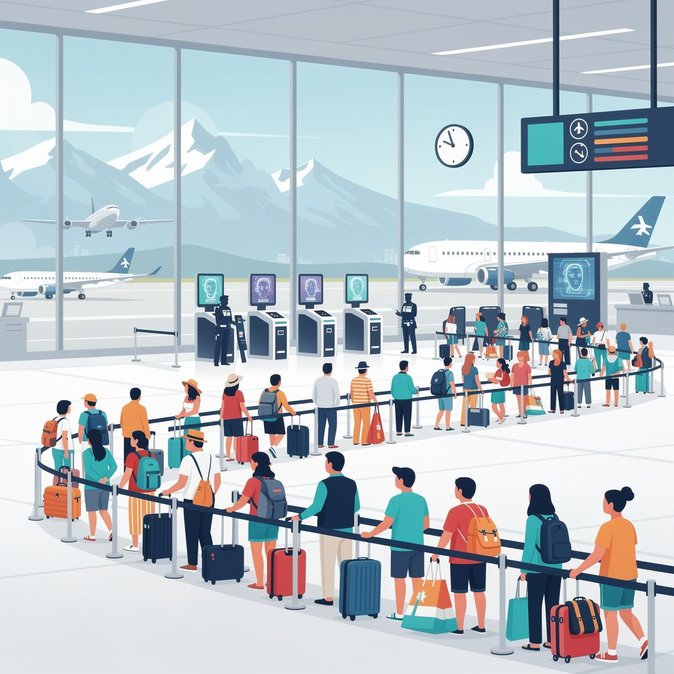
Zurich Airport entered the main summer-holiday weekend with the heaviest single-day traffic in its history. Airport operator Flughafen Zürich AG confirmed that around 110,000 travellers passed through the terminal on Saturday, 11 July 2026 – roughly 20 % more than the comparable peak day last year. Most outbound leisure traffic was short-haul: Spain (Madrid, Alicante, Barcelona) and Portugal (Porto) topped the booking tables, while Stockholm profited from a search for cooler northern climates.
Travellers who discover they still need a transit or destination visa can avoid last-minute headaches by using VisaHQ. The platform walks passengers through Swiss and other countries’ entry requirements, provides digital application tools, courier options and real-time status updates—removing one more stress factor before hitting the renewed summer crowds.
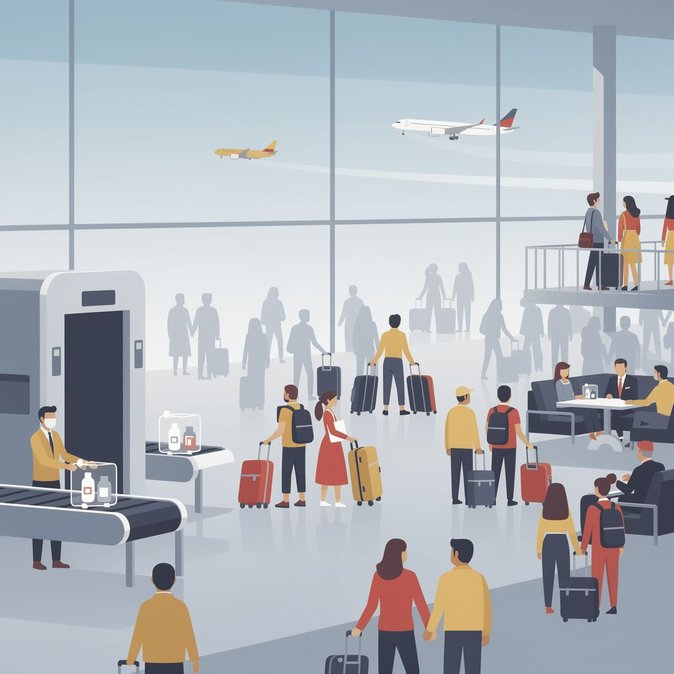
Long-haul demand centred on Bangkok, Singapore, Seoul and several Indian cities. Despite heightened U.S. election-year security rhetoric, bookings to the United States remained robust – only “slightly below” 2025 levels, according to the airport’s largest carrier, SWISS. Operationally, Zurich deployed its new computed-tomography (CT) scanners on all security lanes for the first major travel wave. The technology allows passengers to leave laptops and liquids in cabin bags and permits containers of up to two litres, slashing queue times by an estimated 20 minutes at peak periods. Passenger feedback collected by the airport’s customer-experience team indicated a “noticeable reduction in stress”, especially for families and infrequent flyers. Airlines and ground-handling agents nonetheless warned travellers to arrive at least two hours before Schengen departures and three hours before long-haul flights as staffing remains tight. Swissport said it had hired 300 temporary workers but was still operating “at the edge of capacity” in baggage sorting. For corporate travel managers the message is mixed: the numbers confirm that pent-up leisure demand is back in full force, which may squeeze seat availability and raise fares on key business routes for the rest of July. On the positive side, shorter security processing should make same-day trips through Zurich more predictable – provided connecting airports have similar scanner technology, something that is still patchy across Europe.
Travellers who discover they still need a transit or destination visa can avoid last-minute headaches by using VisaHQ. The platform walks passengers through Swiss and other countries’ entry requirements, provides digital application tools, courier options and real-time status updates—removing one more stress factor before hitting the renewed summer crowds.
Long-haul demand centred on Bangkok, Singapore, Seoul and several Indian cities. Despite heightened U.S. election-year security rhetoric, bookings to the United States remained robust – only “slightly below” 2025 levels, according to the airport’s largest carrier, SWISS. Operationally, Zurich deployed its new computed-tomography (CT) scanners on all security lanes for the first major travel wave. The technology allows passengers to leave laptops and liquids in cabin bags and permits containers of up to two litres, slashing queue times by an estimated 20 minutes at peak periods. Passenger feedback collected by the airport’s customer-experience team indicated a “noticeable reduction in stress”, especially for families and infrequent flyers. Airlines and ground-handling agents nonetheless warned travellers to arrive at least two hours before Schengen departures and three hours before long-haul flights as staffing remains tight. Swissport said it had hired 300 temporary workers but was still operating “at the edge of capacity” in baggage sorting. For corporate travel managers the message is mixed: the numbers confirm that pent-up leisure demand is back in full force, which may squeeze seat availability and raise fares on key business routes for the rest of July. On the positive side, shorter security processing should make same-day trips through Zurich more predictable – provided connecting airports have similar scanner technology, something that is still patchy across Europe.