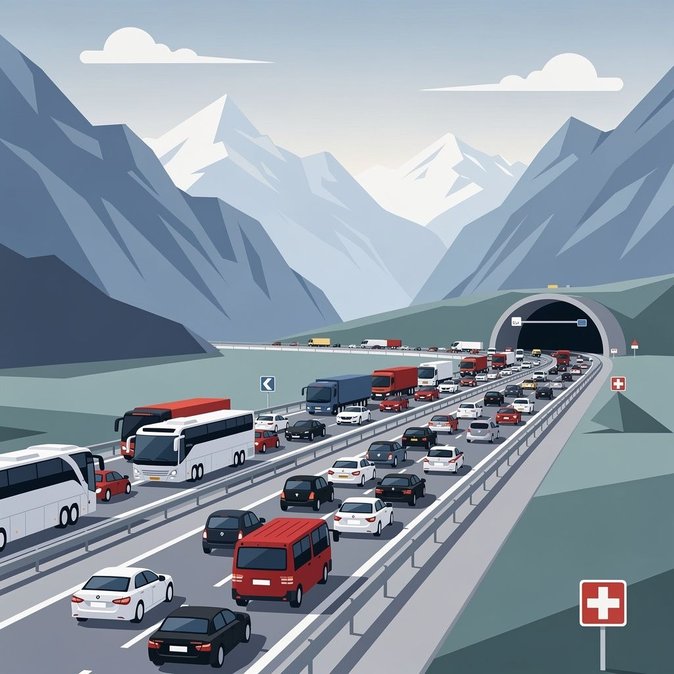
Holidaymakers heading between northern Europe and Italy faced hours-long delays early on Sunday, 12 July 2026, as traffic tailed back more than ten kilometres at the northern portal of Switzerland’s Gotthard Road Tunnel. Real-time data compiled by the Swiss traffic management centre and German travel portal Reisereporter showed waiting times exceeding 90 minutes before 07:00. The 17-kilometre single-tube tunnel is the principal Alpine artery for private cars, coaches and light freight. With staggered school holidays across several German Länder and the first vacation weekend in Switzerland, the usual ‘holiday wave’ arrived earlier and stronger than forecast.
For travellers who also need visas to enter Switzerland or continue through neighbouring Schengen countries, VisaHQ can remove one more potential obstacle. Its streamlined online platform lists current entry requirements, helps complete applications digitally, and offers courier support so that documentation is ready well before you reach the Gotthard bottleneck.
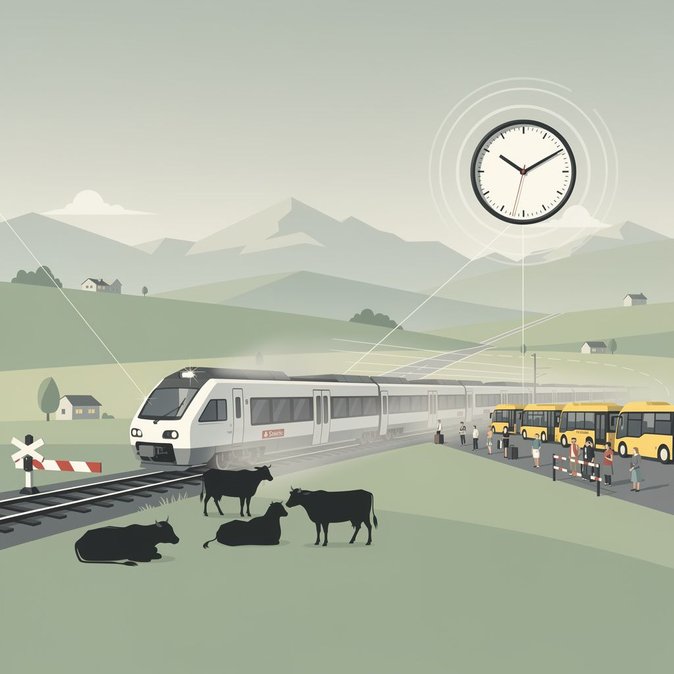
Police in Uri activated the familiar “Dosierung” metering system to limit the number of vehicles inside the tunnel for safety, immediately triggering tailbacks on the A2 motorway toward Göschenen. Motor clubs TCS (Switzerland) and ADAC (Germany) urged drivers to leave either before dawn or after 18:00 and suggested alternative routes via the San-Bernardino (A13) or Simplon passes, warning that satellite navigation apps often underestimate mountain transit times. The forthcoming second Gotthard bore, scheduled to open in 2029, should eventually double capacity, but construction works will periodically close the existing tube overnight over the next three summers, adding to uncertainty. Tour operators moving coach groups between Milan and Lucerne reported schedule disruptions of up to two hours. Logistics companies likewise flagged knock-on effects: time-sensitive e-commerce parcels diverted via rail lost their contingency margin when SBB Cargo’s north-south slots were re-timed at short notice to avoid the busiest road hours. For multinational employers, the congestion underscores the need to factor Alpine transit risk into staff mobility plans. HR departments arranging expatriate house-hunts or Monday-morning cross-border commutes should allow wide buffers or consider rail alternatives such as the Ceneri Base Tunnel route via Ticino, which remains largely unaffected by road jams.
For travellers who also need visas to enter Switzerland or continue through neighbouring Schengen countries, VisaHQ can remove one more potential obstacle. Its streamlined online platform lists current entry requirements, helps complete applications digitally, and offers courier support so that documentation is ready well before you reach the Gotthard bottleneck.
Police in Uri activated the familiar “Dosierung” metering system to limit the number of vehicles inside the tunnel for safety, immediately triggering tailbacks on the A2 motorway toward Göschenen. Motor clubs TCS (Switzerland) and ADAC (Germany) urged drivers to leave either before dawn or after 18:00 and suggested alternative routes via the San-Bernardino (A13) or Simplon passes, warning that satellite navigation apps often underestimate mountain transit times. The forthcoming second Gotthard bore, scheduled to open in 2029, should eventually double capacity, but construction works will periodically close the existing tube overnight over the next three summers, adding to uncertainty. Tour operators moving coach groups between Milan and Lucerne reported schedule disruptions of up to two hours. Logistics companies likewise flagged knock-on effects: time-sensitive e-commerce parcels diverted via rail lost their contingency margin when SBB Cargo’s north-south slots were re-timed at short notice to avoid the busiest road hours. For multinational employers, the congestion underscores the need to factor Alpine transit risk into staff mobility plans. HR departments arranging expatriate house-hunts or Monday-morning cross-border commutes should allow wide buffers or consider rail alternatives such as the Ceneri Base Tunnel route via Ticino, which remains largely unaffected by road jams.