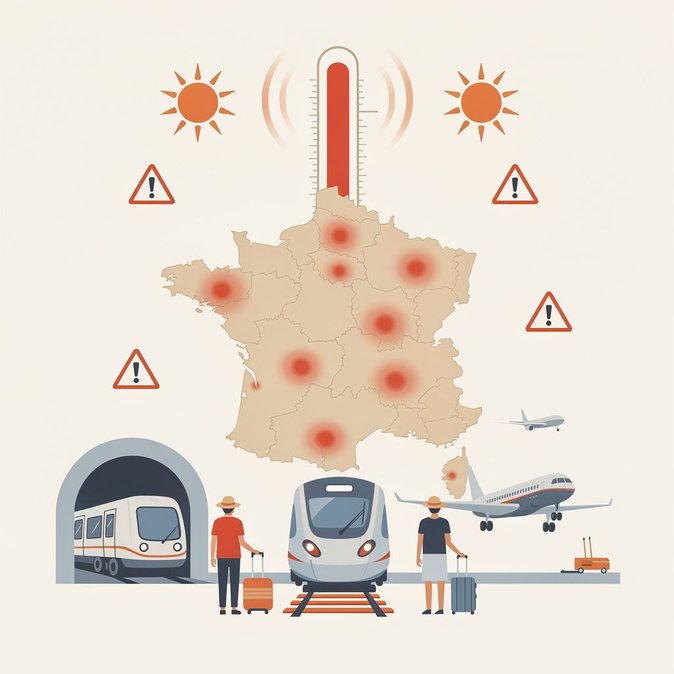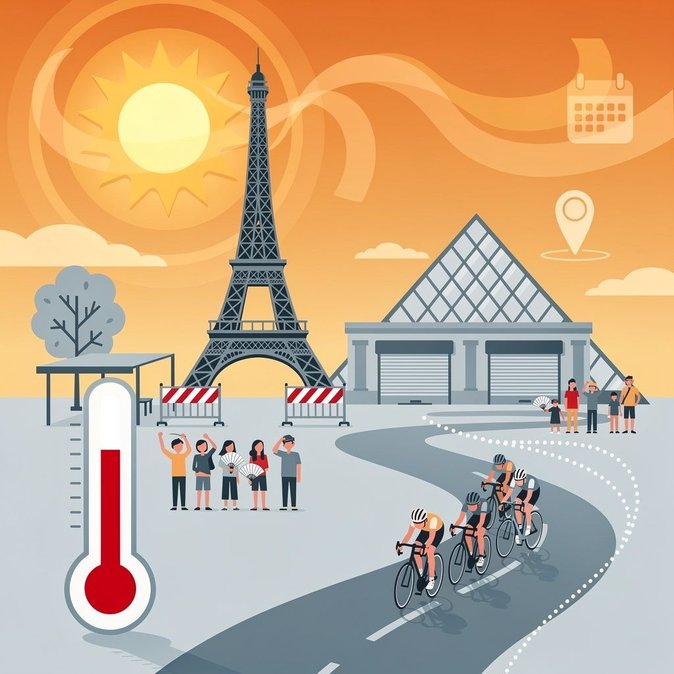
Another bout of extreme heat swept across France this weekend, forcing some of the country’s most visited sites – including the Eiffel Tower, the Louvre and the Musée d’Orsay – to close several hours earlier than usual. The operator of the 324-metre-tall Eiffel Tower said that from 11 to 12 July, last entry would be at 15:00 and the monument would shut at 16:00, instead of operating until after midnight at the height of the summer season. France’s two flagship museums took comparable measures, advancing their last admissions to mid-afternoon in order to protect both visitors and staff from temperatures forecast to top 42 °C in central Paris. The heat is also altering France’s flagship sporting event. Amaury Sport Organisation, organiser of the Tour de France, announced on Saturday evening that Sunday’s Stage 15 would be shortened by 30 km, the first time in the race’s 123-year history that a stage has been cut purely for meteorological reasons. Race doctors warned that prolonged exposure on exposed Alpine roads could put riders at risk of heat stroke. Teams have been told they may carry extra ice socks and adopt ‘cold-start’ protocols at feed zones. For international business travellers and expatriates based in Paris, the abrupt timetable shifts pose practical challenges. Afternoon meetings at tourist venues, after-hours networking dinners overlooking the Seine, and incentive events built around Tour de France hospitality programmes all need re-scheduling. Travel managers should reconfirm any pre-booked after-hours private visits and advise assignees that evening taxi availability around closed sites will be tighter than usual. The service reductions also highlight a wider operational risk: French labour law obliges employers to protect employees from ‘thermique extrême’. Firms operating visitor attractions must therefore reduce hours once the official red-alert threshold (night-time lows above 24 °C and day-time peaks above 40 °C) is reached. More closures are likely if the heatwave extends into Bastille Day week, when the capital traditionally attracts a surge of overseas visitors. Looking ahead, city authorities say a permanent ‘high-heat’ protocol will be embedded in the new Paris Tourism Charter being drafted for the 2027 Olympic legacy. This will formalise early-closing rules and set minimum ventilation standards in public buildings – information global mobility departments may wish to add to their destination guides.
Source: AFPBB News