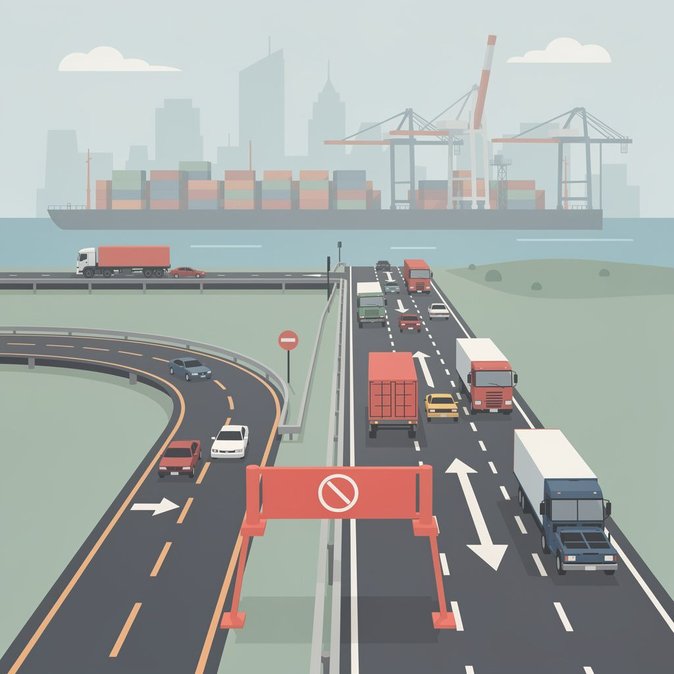
The Brazilian Navy’s Hydrographic Center (CHM) released an ocean-weather bulletin at 10:45 a.m. on 13 July warning of a powerful swell that could generate waves between 2.5 m and 3 m along Rio de Janeiro’s coastline until 9 a.m. on Tuesday, 14 July. Maritime pilots serving the Port of Rio and cruise-terminal operators have already begun revising docking windows and restricting small-craft movement. Cargo vessels entering Guanabara Bay may face temporary anchorage holds, while the city’s Pier Mauá cruise facility—currently hosting two off-season expedition ships—has advised agents to brace for schedule adjustments. Although July is low season for international cruises, Rio’s port handles a steady flow of container traffic and offshore-supply vessels that service Brazil’s deep-water energy platforms. Logistics managers for multinational companies moving equipment between Rio and Campos Basin report that any prolonged closure of the main channel could cascade into delays at the fast-growing Port of Itaguaí, 90 km to the west, as ships seek alternative berths. City authorities have activated the Centro de Operações Rio (COR) to broadcast safety messages in English and Spanish across hotel networks, targeting business travelers in town for this week’s Latin America Power & Renewables Forum. Delegates have been urged to avoid seaside bike paths and cliff-top viewpoints such as Mirante do Leblon, areas that habitually attract foreign visitors. For mobility managers, the practical implications are two-fold: (1) ground transportation from Galeão Airport to beachfront hotels could be slowed if Avenida Atlântica floods; (2) regional flights using smaller coastal airports—including Cabo Frio and Macaé—may encounter low-level wind-shear restrictions. Travel-risk teams should monitor the Navy’s updates and keep in close contact with DNV-certified port agents should cargo or crew movements be involved. Historically, similar winter swells have forced short-notice cruise diversions to Santos or Búzios. Companies with duty-of-care obligations should confirm that on-call transport vendors possess high-clearance vehicles and are prepared for overnight detours should coastal highways be affected.
Source: O Dia