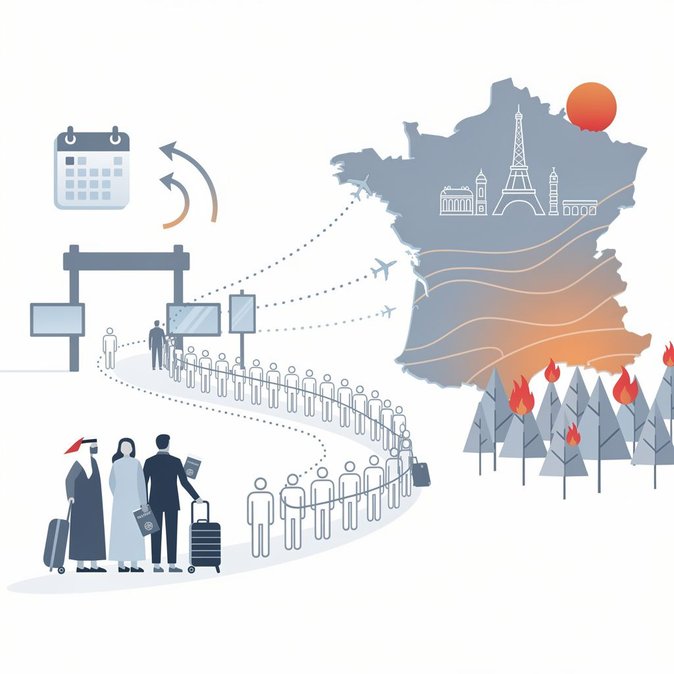
Middle-East travel agents are reporting a drop in last-minute bookings to France after a string of headlines about heatwaves, wildfires and visa-processing delays. Dubai-based tour operators told Gulf News that families are looking to cooler destinations such as Scandinavia or opting to postpone trips until September. While flights from the UAE to Paris-CDG and Nice are operating normally, advisors highlight three pain points: longer Schengen-visa lead times (now averaging 21 days), uncertainty over July wildfires that closed the A6 motorway and delayed TGVs, and fears that the forthcoming EES biometric checks will slow entry formalities.
For travellers trying to navigate the first of those pain points, a dedicated visa-assistance platform such as VisaHQ can be a lifesaver. Its France portal allows UAE residents to pre-fill application forms online, book the earliest available VFS appointment and receive status alerts so they can plan flights and rail connections with greater confidence—services that have become especially valuable now that lead times have stretched beyond three weeks.
French tourism officials insist that major attractions remain open and that infrastructure resilience has improved since 2023, pointing to new air-conditioned RER trains and additional water-filling stations at popular sites. They also note that Emirati travellers with diplomatic passports can still benefit from accelerated visa lanes. For mobility professionals the trend is a reminder to communicate realistic travel-time estimates and to secure appointments at VFS Global centres well in advance. Companies relocating staff from the Gulf this summer are advised to split travel over two days, book flexible rail tickets within France, and keep alternatives such as Lyon or Geneva airports in reserve. Industry analysts say the reputational hit could linger if another extreme-weather episode occurs during August peak, potentially affecting France’s wider attractiveness to foreign talent and investors.
For travellers trying to navigate the first of those pain points, a dedicated visa-assistance platform such as VisaHQ can be a lifesaver. Its France portal allows UAE residents to pre-fill application forms online, book the earliest available VFS appointment and receive status alerts so they can plan flights and rail connections with greater confidence—services that have become especially valuable now that lead times have stretched beyond three weeks.
French tourism officials insist that major attractions remain open and that infrastructure resilience has improved since 2023, pointing to new air-conditioned RER trains and additional water-filling stations at popular sites. They also note that Emirati travellers with diplomatic passports can still benefit from accelerated visa lanes. For mobility professionals the trend is a reminder to communicate realistic travel-time estimates and to secure appointments at VFS Global centres well in advance. Companies relocating staff from the Gulf this summer are advised to split travel over two days, book flexible rail tickets within France, and keep alternatives such as Lyon or Geneva airports in reserve. Industry analysts say the reputational hit could linger if another extreme-weather episode occurs during August peak, potentially affecting France’s wider attractiveness to foreign talent and investors.