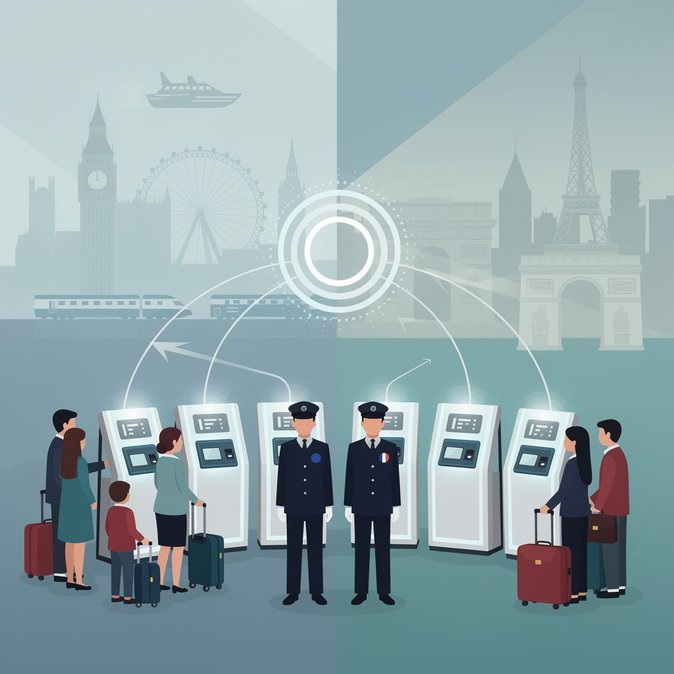
Holiday-season pressure on the Channel crossings has become a strategic headache for both Paris and London. On Sunday, 12 July, UK transport secretary Heidi Alexander and French transport minister Philippe Tabarot announced an immediate plan to deploy additional French border-police officers at Dover, Folkestone and London St Pancras, as well as at juxtaposed controls on the French side of the Channel Tunnel. Funding of £20 million from the UK Treasury will finance extra passport booths, mobile biometric kiosks and overtime for French staff, complementing earlier infrastructure spending agreed in May. The emergency measures are a direct response to the European Union’s new Entry/Exit System (EES), which has been fully operational since April. Under EES, every non-EU traveller must provide a facial image and four fingerprints the first time they cross an external Schengen border. At high-throughput sites such as Dover and St Pancras, the kiosks have struggled with peak volumes, forcing French officials to register passengers manually—an exercise that added up to four-and-a-half hours to journey times during the May half-term rush. With British schools breaking up this week, traffic is forecast to surge by 50 % compared with a normal weekend and port authorities warned MPs of “utter chaos and miles of tailbacks” if no fix was found. Operationally, the deal means the Police aux Frontières will station up to 40 extra officers on UK soil during peak getaway weekends, while UK Border Force will open overflow lanes to keep vehicles moving towards French booths. Eurotunnel will receive ten handheld biometric tablets so that French staff can register coach passengers on board rather than on the platform, and Eurostar has been authorised to stagger train boarding in 30-minute waves to prevent concourse crowding. For businesses, the move offers short-term relief: logistics operators feared missed sailing slots could cost millions in penalty charges, while Paris-based corporates worried about employees being stranded mid-journey. Nevertheless, the root issue—slow biometric capture—remains unresolved. Industry bodies continue to press Brussels to allow “trusted traveller” or e-gate options for frequent business visitors before the system’s enforcement grace period ends on 6 September. Until then, companies are advised to build generous buffers into travel itineraries, pre-register staff where possible and monitor live border-wait dashboards provided by the Port of Dover and Getlink.
Source: The Guardian