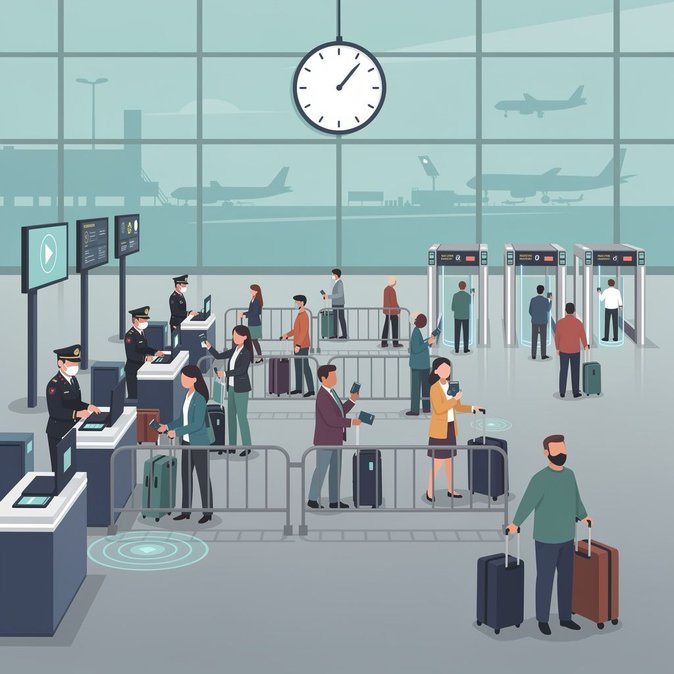
Zurich Airport has warned passengers to expect longer wait times this summer as Switzerland phases in the European Union’s Entry/Exit System (EES), the biometric database that registers arrivals and departures of third-country nationals across the Schengen area. The digital platform, which went fully live on 10 April, captures facial images and fingerprints the first time a traveller enters Schengen territory and stores them for three years. While the aim is to automate border management and replace passport stamps, frontline officers say enrolment slows each passport check by up to 30 seconds—a bottleneck that quickly compounds during peak holiday waves. Because Switzerland hosts one of Europe’s busiest long-haul hubs, the impact is felt most sharply at Zurich’s Terminal 2 where non-EU flights arrive. Airport operator Flughafen Zürich AG and the cantonal police have already diverted staff from other duties to man additional e-gates and manual booths. On peak days, passenger numbers exceed 110,000—close to pre-pandemic records—so even marginal slow-downs translate into snaking queues that spill into the shopping concourse. For Swiss and EU/EFTA citizens nothing changes procedurally, yet the indirect effect can still be missed connections. Travel managers are therefore advising staff to book longer connection windows, particularly on itineraries involving onward European low-cost flights that lack protected transfers. Employers should also remind assignees with Swiss B- or C-permits to carry their residence cards; these allow them to bypass first-time biometric capture when returning from non-Schengen trips. Border-control authorities say teething problems should ease once a critical mass of travellers is enrolled in the database, but concede that summer 2026 will be testing. The episode is an instructive case study for other Schengen airports—and for corporate mobility policies that still assume a 45-minute minimum connection at Zurich.
Source: Nau.ch / Travelnews