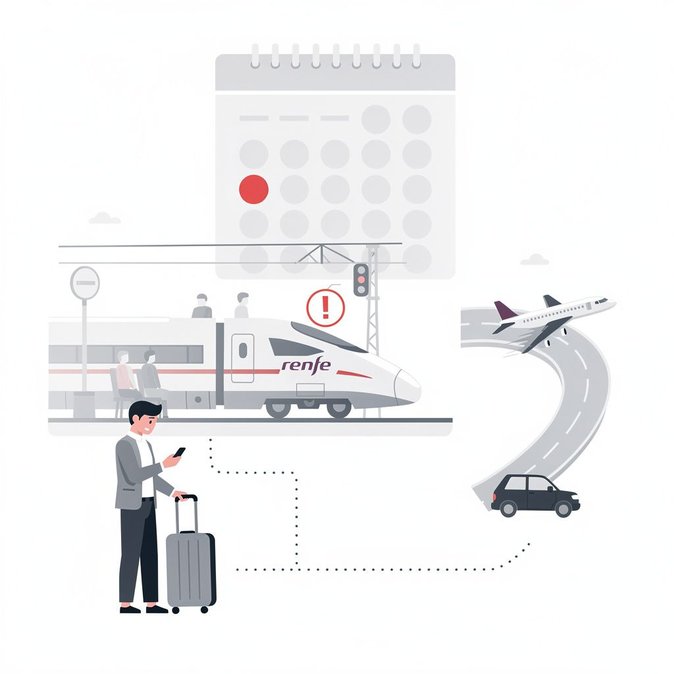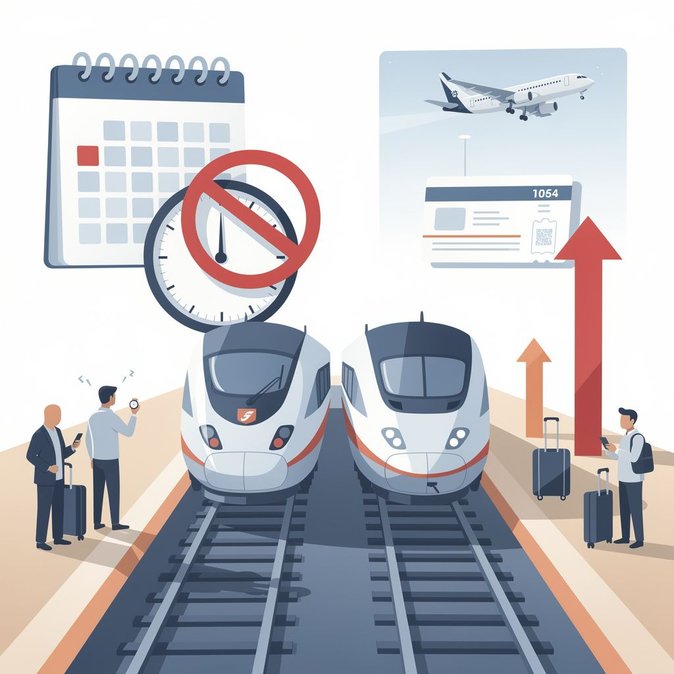
The Spanish Railway Union (Sindicato Ferroviario, SF) staged a 24-hour walk-out on Wednesday, 15 July 2026, protesting what it calls the “privatisation and dismantling” of Renfe Mercancías, the state-owned freight subsidiary. Although the Ministry of Transport fixed minimum-service levels at 73 % for AVE high-speed trains, Renfe confirmed the cancellation of seven long-distance services and over 3 % of regional and commuter (Cercanías, Rodalies, Media Distancia) departures nationwide. For business travellers the impact was most acute on the Madrid-Barcelona and Madrid-Seville corridors, where early-morning AVE frequencies were reduced, forcing some passengers onto later trains and prompting rail-to-air modal shifts at the last minute. Renfe activated automatic rebooking and penalty-free refunds, but corporate-travel managers reported a spike in same-day airfares of up to 40 % on competing Iberia and Vueling flights. The strike is the second in a series after the 29 June stoppage and reflects union fears that the incoming strategic partner Medway will outsource diesel-locomotive maintenance, endangering roughly 2,000 jobs nationwide. SF spokesperson Rafa Escudero accused Renfe of “boicotear la huelga” by issuing more minimum-service letters than the ministerial order allows. Participation hovered below 4 %, according to company figures, but even limited absenteeism can cascade into missed crew connections and knock-on delays. For employers operating commuter-heavy sites—such as tech parks around Madrid’s Atocha and Barcelona-Sants stations—today’s disruption is a reminder to update remote-work and expense-policy contingencies. Travellers holding Spain’s flexible corporate fare should proactively change bookings before future strike dates to avoid seat unavailability. The next negotiation round is scheduled for September; if talks fail, unions warn of strikes during the peak October conference season.
Source: Agencia EFE