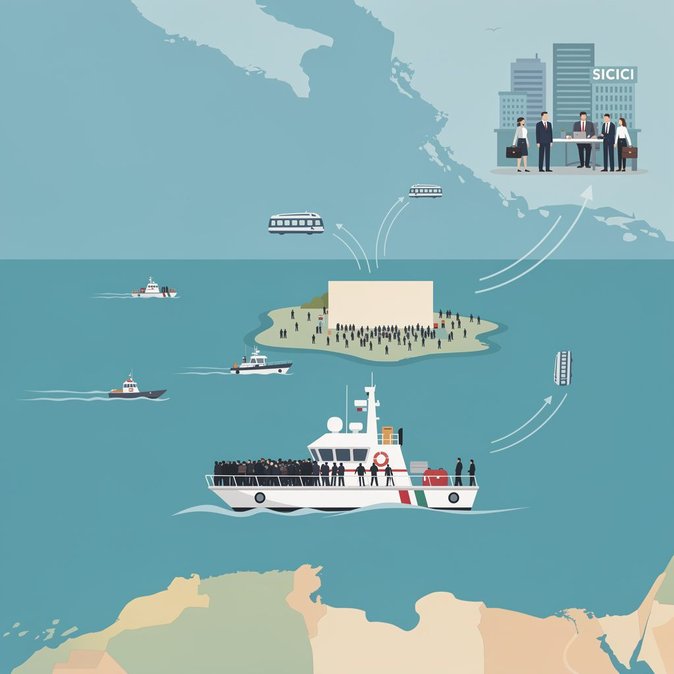
Italian search-and-rescue units brought 391 people ashore in Lampedusa on 15 July after intercepting six overcrowded wooden boats in the Strait of Sicily. According to Guardia Costiera logs seen by La Sicilia, the vessels had left Zwara and Sabratha overnight and were carrying nationals of Sudan, Nigeria, Guinea, Côte d’Ivoire and Syria, including 46 unaccompanied minors. All arrivals were transferred to the Imbriacola reception centre, whose occupancy rose to 1,531—three times its nominal capacity of 600. Prefectural officials activated the “Allegra” de-compression plan, bussing 250 people to Porto Empedocle for onward relocation to facilities in Calabria and Piedmont within 48 hours. The landings confirm a resurgence of the Central Mediterranean route after a weather-related lull earlier in July. Interior-ministry statistics show 14,388 sea arrivals in the first half of 2026, 28 % below last year but concentrated on Lampedusa (56 % of the total). Aid NGOs warn that the island’s medical post is strained: Doctors for Humanity reported 17 cases of dehydration and burns from fuel-sea-water mix among yesterday’s arrivals. For employers using Italy’s new single-permit scheme this summer, the operational impact is limited, but mobility managers should expect continued political debate over quotas and faster asylum procedures. The government’s draft decree to re-allocate 3,000 seasonal-work permits from unused agricultural quotas to construction was sent to the State-Regions conference yesterday and could pass by end-July. From a duty-of-care perspective, organisations with staff traveling to Sicily should monitor ferry and flight capacity—July’s daily arrivals often trigger temporary restrictions on tourist hydrofoils and charter flights diverted to Palermo. The foreign ministry reiterated that commercial travellers must not attempt to visit the hotspot without authorisation, citing public-order rules introduced after the Pope’s 4 July pastoral visit.
Source: La Sicilia