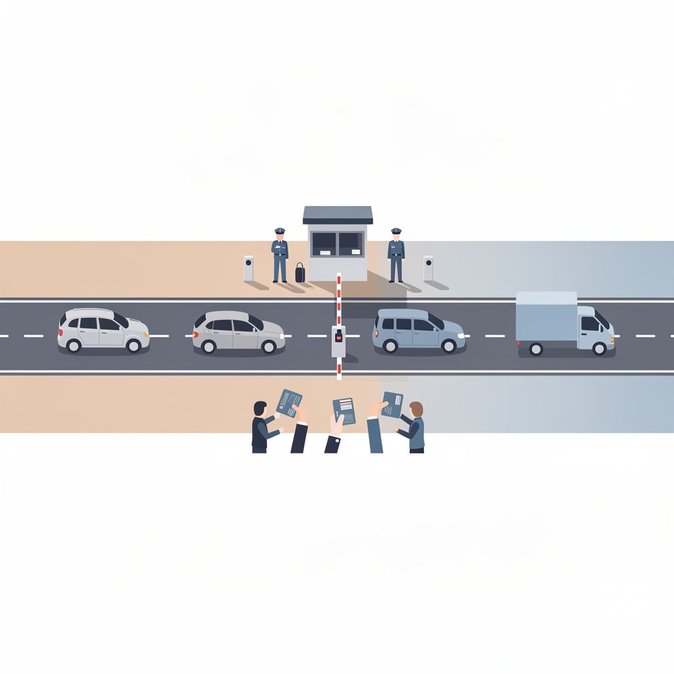
Australian foreign-affairs portal Smartraveller updated its Italy travel advice on 15 July 2026 to confirm that the Italian government is maintaining temporary border controls on the land frontier with Slovenia. The controls were re-introduced last October in response to regional security concerns and continued migration pressures along the so-called Balkan route. Although EU rules allow internal Schengen borders to remain normally control-free, Article 25 of the Schengen Borders Code lets member states carry out checks “as a last resort” when public security is at stake. For business travellers and corporate assignees who regularly shuttle between Trieste, Udine or Venice and adjacent Slovenian hubs such as Koper and Ljubljana, the measure means passport inspections, vehicle searches and occasional short queues at the Fernetti/Vrtojba, Pesek/Kozina and Rabuiese/Skofije crossings. Long-distance coach operators have already adjusted schedules to reflect additional transit time, while freight forwarders report average waiting times of 20-30 minutes for commercial trucks during peak hours. Immigration lawyers note that the checks do not change visa-waiver eligibility: Schengen and EU residence permit holders may still circulate freely, provided they carry proof of status. Non-EU nationals who normally rely on their Italian residence permit or national visa to cross into Slovenia must ensure the document is valid for at least three months and can be presented in original form; digital copies are not accepted at the checkpoint. Companies with cross-border commuters are advised to add a 45-minute buffer when roster planning and to remind employees that random vehicle searches are increasingly common. Travellers connecting onward to Ljubljana Airport should allow extra time to clear the border before their flights. Firms moving temperature-sensitive goods are encouraged to consult Italy’s Viabilità Italia bulletins for real-time traffic data. While neither Rome nor Ljubljana has indicated a specific end-date, officials in both capitals say the controls will be re-assessed at the end of the summer holiday period. Mobility managers should therefore treat the measure as semi-permanent and monitor weekly Ministry of Interior communiqués for any relaxation or tightening of procedures.