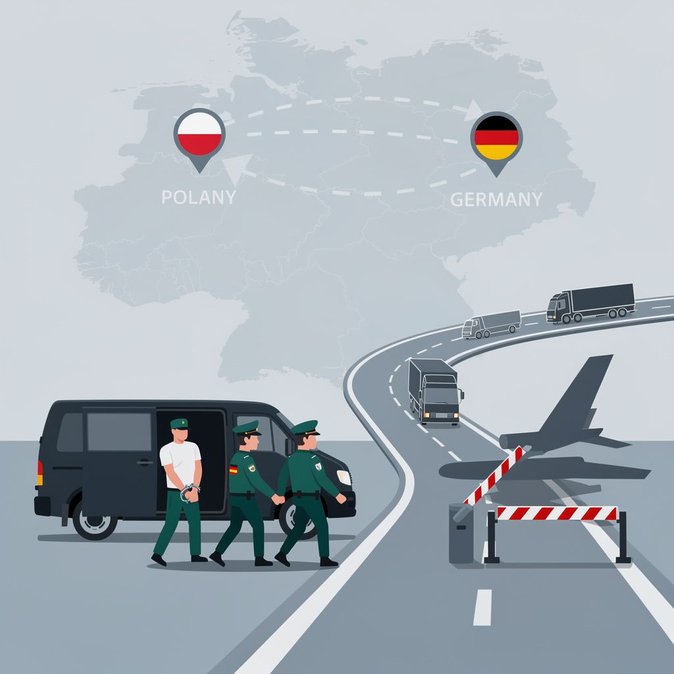
Polish authorities on 14 July 2026 deported a 32-year-old Uzbek citizen convicted of facilitating irregular migration from Belarus into the EU. After completing a prison sentence in Zamość, the man was escorted to Warsaw Chopin Airport and placed on a flight out of the country, the Border Guard’s Nadbużański Division said. According to the case file, the defendant coordinated pick-ups of small groups who had crossed the Belarus–Poland border through the Białowieża forest. He then transported them towards Germany in exchange for payments of up to US$1,500 per person. Prosecutors tied him to at least six such runs in mid-2025 before his arrest in a sting operation. Under the deportation order he is barred from re-entering Poland and the entire Schengen Area for a decade – one of the longest bans permissible under Polish law. The operation follows a series of joint Polish-German patrols on the A2 highway aimed at dismantling smuggling rings that have shifted from Iraqi and Afghan clientele to North-African and South-Asian nationals. For companies operating cross-border logistics this signals that roadside checks near the eastern frontier will intensify over the summer peak. Drivers transporting high-value cargo should anticipate random vehicle searches and possible delays, while HR teams moving staff between Polish and German sites should ensure passports carry valid entry stamps to avoid profiling.
Source: Komenda Główna Straży Granicznej