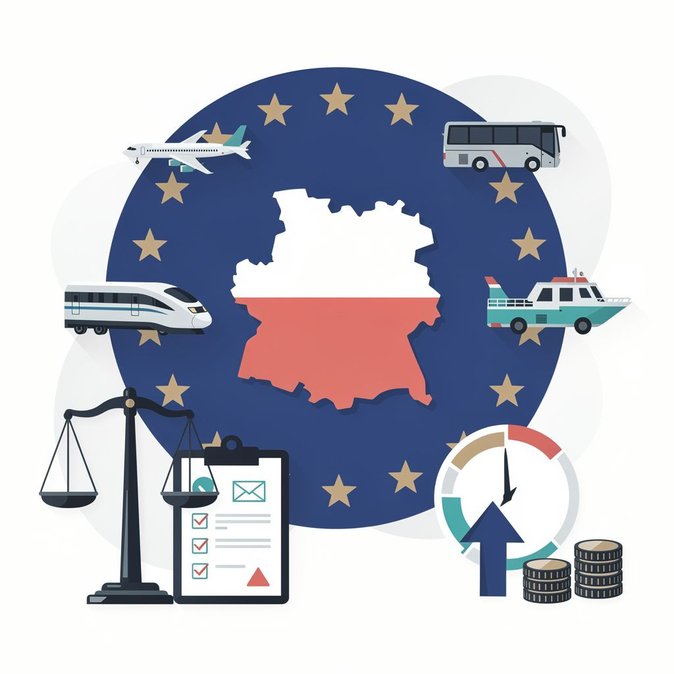
Meeting in Brussels on 15 July 2026, the Committee of Permanent Representatives (Coreper I) endorsed a compromise text that overhauls the EU’s passenger-rights framework (Regulations 261/2004 for air, 1107/2006 for persons with reduced mobility, 1177/2010 for sea and inland waterways, 181/2011 for coach, and 2021/782 for rail). The package introduces a single enforcement toolbox, higher minimum staffing for national enforcement bodies and—crucially—administrative-fine ceilings of at least 4 % of a carrier’s EU turnover for systemic breaches. Austria’s Ministry for Climate Action, Mobility and Innovation (BMK) welcomed the deal, noting that Austrian Airlines, ÖBB Railjet, FlixBus and river-cruise operators will face stricter deadlines for responding to complaints (now 20 days) and must publish quarterly performance dashboards. The national enforcement body Schienen-Control will be given investigative powers to run “mystery-shopper” checks at Vienna Airport, Westbahnhof and Danube river terminals. The regulation still needs formal Council and Parliament votes—expected after the summer recess—but the Coreper green light means the text is unlikely to change. Once adopted, member states have 18 months to adapt. Lawyers in Vienna say companies moving staff within Europe should budget for higher compensation exposure: for example, air passengers delayed more than three hours on flights up to 1,500 km will be entitled to €350 (up from €250), and missed-connection protection is extended to multimodal journeys booked under one contract. Travel-management companies advise multinational employers to update duty-of-care protocols and consider third-party claims-handling services. Because Austria is a major transfer hub for Central and Eastern Europe, the tougher rules could increase operating costs for airlines but should reduce costly litigation for passengers. From a compliance standpoint, Austrian businesses that charter buses or organise incentive cruises will also fall under the new regime if they sell packages directly to customers. Experts recommend mapping current complaint workflows against the incoming 20-day response deadline well before the enforcement date.