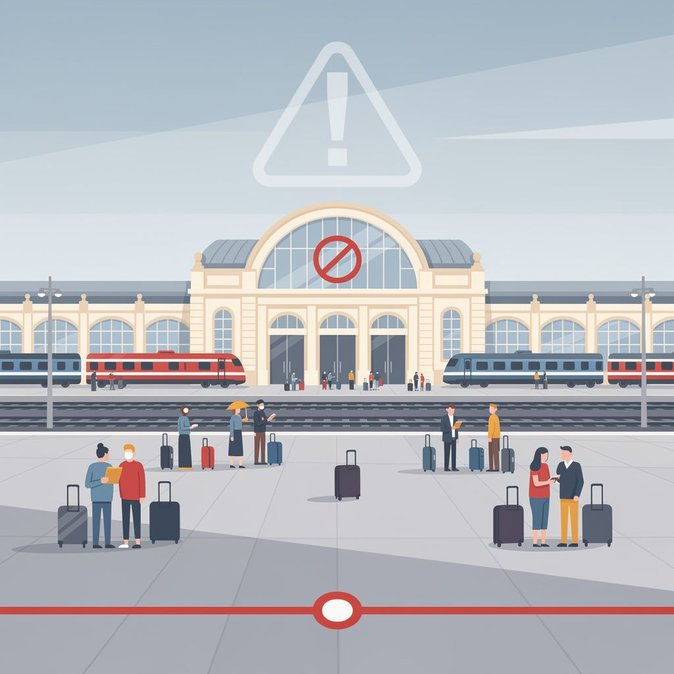
A bomb threat received shortly before 08:00 CET on 14 July 2026 forced an immediate evacuation of Prague’s Hlavní nádraží (Main Railway Station), the country’s busiest rail hub, halting all long-distance and suburban train traffic as well as Metro Line C services to the station. Police cordoned off the building, deployed bomb-disposal units and advised passengers to check České dráhy and Prague Public Transit (DPP) channels for live updates. The shutdown came at the height of the Tuesday morning commute, stranding thousands of travellers and causing knock-on delays across the national rail network. International EuroCity services to Berlin, Vienna and Bratislava were either cancelled or diverted to peripheral stations such as Praha-Holešovice and Praha-Smíchov, while Leo Express and RegioJet re-routed buses to connect with alternate rail hubs. Although similar hoaxes in 2016, 2019 and 2021 were resolved within hours, the incident highlights the vulnerability of Prague’s central node just as summer tourist arrivals peak. Airports Council International reports that 38 % of visitors arriving at Václav Havel Airport continue their journey by train; any prolonged rail disruption therefore cascades into hotel check-ins, tour departures and business itineraries. For mobility managers the incident is a prompt to review emergency rerouting protocols and ensure that expatriate employees and international assignees have access to real-time travel alerts in English. Employers with staff transiting Prague this week should re-confirm train reservations, allow additional transfer time and brief travellers on alternative metro or tram options should the main station closure recur. Prague police have opened an investigation under Section 175 of the Czech Criminal Code (spreading false alarm), which carries a potential sentence of up to eight years. While service progressively resumed after midday, residual delays persisted into the evening peak, underscoring the importance of contingency planning for both leisure and corporate travellers.
Source: Expats.cz / ČTK