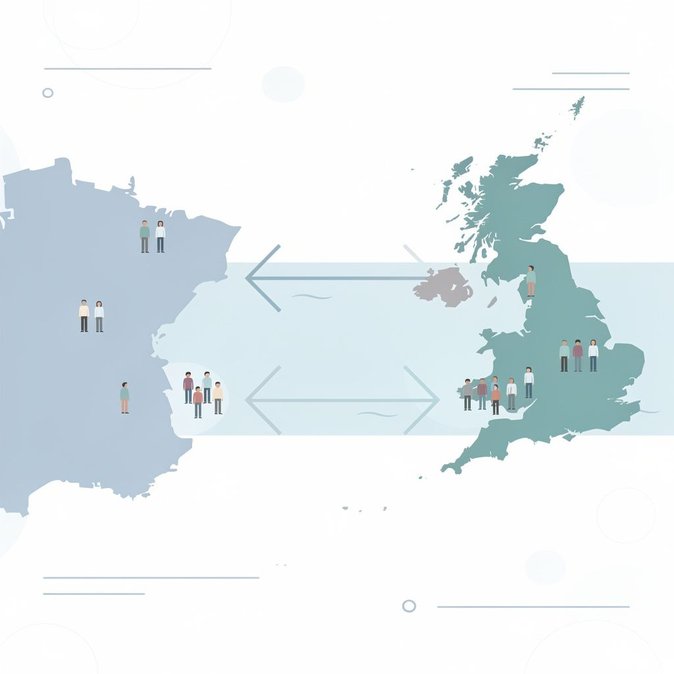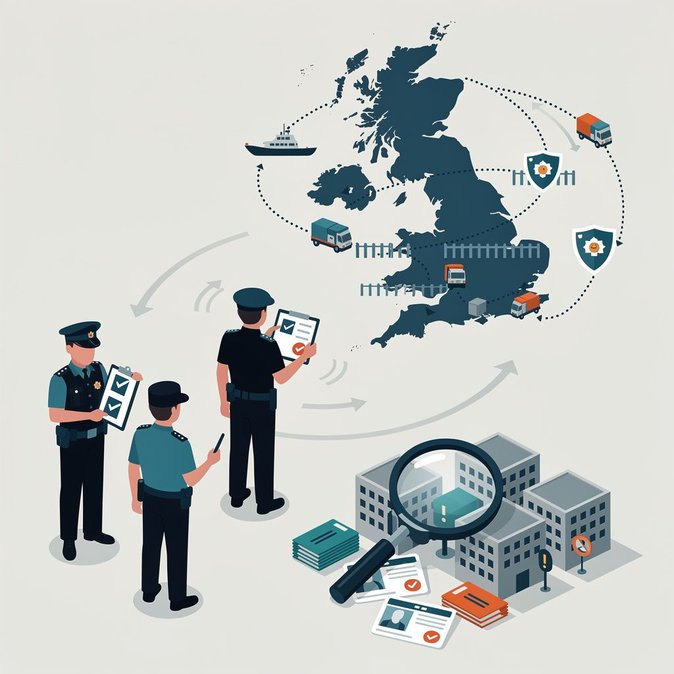
The Home Office has released new transparency data alongside the Border Security Commander’s Annual Report, revealing a sharp escalation in law-enforcement activity against organised immigration crime (OIC). Between April 2025 and March 2026, agencies recorded 3,766 “disruptions” – asset seizures, arrests and other enforcement actions aimed at smuggling networks – up 46 % on the previous year. Major disruptions that dismantle crime groups rose 29 % to 108. Officials attribute the increase to joint operations led by the National Crime Agency, Border Force and police forces across the UK, under a strategy that combines financial-crime tactics with traditional border policing. The crackdown comes amid continuing political pressure over irregular Channel crossings, which hit a record 29,000 in calendar-year 2025 despite tougher legislation. For employers, the figures signal a higher probability of supply-chain audits and site visits, especially in sectors previously linked to illegal work such as logistics, car-washes and hospitality. “We are now sharing real-time intelligence with licensing bodies and local authorities,” a senior Home Office official told Global Mobility News. Penalties for employing migrants without valid status can reach £60,000 per worker under rules tightened last year. The data set is branded “statistics in development”, reflecting methodological refinements that lowered absolute volumes compared with legacy series but provided more granular impact categories. Analysts caution that higher disruption counts do not automatically translate into convictions; however, arrests linked to OIC also jumped 74 % to an estimated 1,900 – a sign, campaigners say, that enforcement is increasingly targeting facilitators rather than migrants themselves. In practical terms, global mobility teams should review right-to-work checking procedures and audit labour providers before peak seasonal hiring. Firms that rely on intra-company transfers should expect longer security vetting as enforcement agencies cross-check work-visa data against OIC intelligence databases.
Source: UK Home Office (GOV.UK)