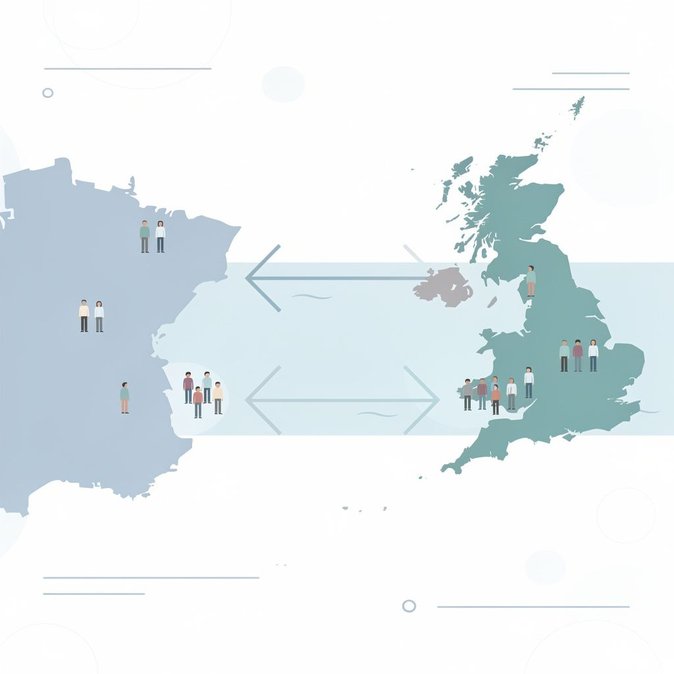
Fresh statistics released today shed light on how the UK-France Agreement on the Prevention of Dangerous Journeys – popularly dubbed the “one in, one out” scheme – is operating nearly a year after launch. From the start of operational delivery on 6 August 2025 through 30 June 2026, 1,117 people were transferred from France to the UK while 1,087 were returned to France after crossing the Channel in small boats, achieving almost perfect parity. Under the reciprocal deal, for every migrant the UK deports to France, Paris agrees to send an asylum-eligible person already present in France to Britain. Ministers argue the arrangement undercuts smugglers by proving that irregular entry does not guarantee a future in the UK. Critics counter that the numbers remain tiny compared with the tens of thousands making the crossing each year and that “human swaps” do little to address root causes. The month-by-month data show a steep ramp-up: just 3 transfers to the UK and 17 returns to France occurred in September 2025, but by June 2026 the figures had climbed to 314 and 264 respectively. Home Office officials credit improved case-working pipelines and dedicated charter flights funded jointly by both governments. For mobility and relocation managers, the data matter because they signal sustained policy emphasis on deterring irregular migration, which spills over into tighter scrutiny of legitimate work visa routes. Companies sponsoring Skilled Worker or Expansion Worker visas have reported more frequent requests for evidence that employees will not be deployed on unassigned duties that could breach immigration control. Looking ahead, the Border Security Commander confirmed that the pilot will be reviewed in October. A senior French interior-ministry source told Global Mobility News that Paris may seek an extension provided processing costs are shared more evenly and the UK expands family-reunification quotas for minors stranded in northern France.
Source: UK Home Office (GOV.UK)