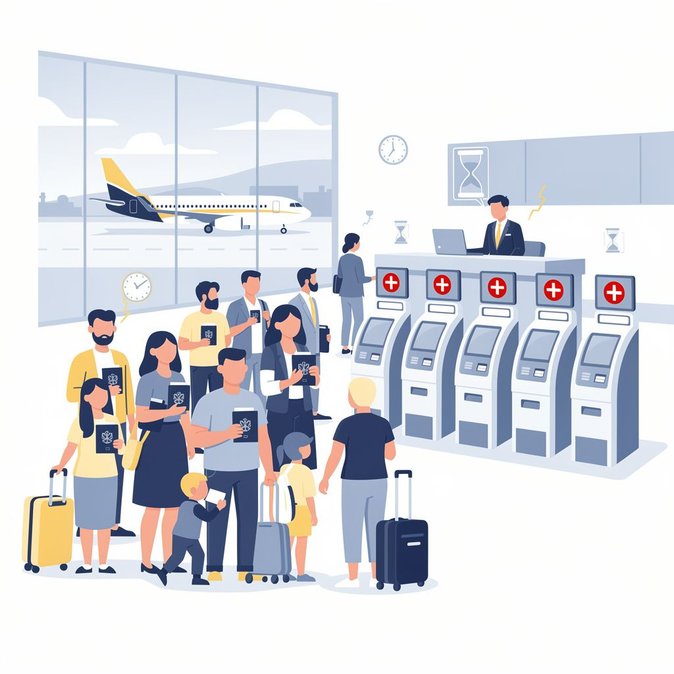
Budget carrier Ryanair has issued an unusually blunt travel advisory for British holiday-makers departing for Europe over the school break, warning that teething problems with the European Union’s new Entry/Exit System (EES) are still causing “unnecessary delays and long queues” at many popular sun-belt airports. EES – the biometric border database that records every non-EU traveller’s fingerprints, facial image and passport details on first entry – officially went live for UK nationals in March. European ministers hailed the rollout as a step toward fully digital borders, but airlines, airports and border police have struggled to keep hundreds of new self-service kiosks working under peak summer loads. According to Ryanair’s Chief Operations Officer Neal McMahon, some airports “still do not have fully functioning kiosks in place, while border staffing levels remain inadequate.” The carrier has singled out Lisbon, Malaga, Milan Bergamo, Paris Beauvais and Tenerife South among a list of 15 “EES hotspots” where UK passengers have faced hour-long queues on both outbound and inbound legs. For British families, the practical implications are clear: plan to arrive earlier than usual, keep children close at the kiosks where fingerprints are taken, and be ready to explain multiple times that you have already provided biometrics on a previous trip. Travel insurers are already fielding questions about missed connections that may result from the holdups. Business travellers are also feeling the pinch. Global mobility managers at several FTSE 100 firms told Global Mobility News they are rerouting short-haul meetings to virtual calls or Eurostar where possible until throughput improves. Behind the scenes, several EU member states are lobbying Brussels to delay the next compliance deadline – full enforcement of penalty fees for non-registered travellers – until early 2027. Airports Council International Europe supports the pause, arguing that the pandemic-era loss of staff combined with unforeseen technical bugs means “the system is not yet ready for 200 million leisure passengers.” UK ministers have no direct say over EES policy post-Brexit but are monitoring impacts closely; the Home Office told Parliament last week that it is sharing queue-time data with counterparts in Spain and Portugal. Until changes are agreed, Ryanair’s advice is likely to shape public expectations. The airline recommends that families travelling through identified hotspots allow an extra 45–60 minutes at passport control and make use of priority channels where available. While some airports do sell fast-track passes, consumer group Which? notes that a family of four could pay almost £200 for what might only shave a few minutes off their wait. For now, patience – and perhaps a fully charged phone for restless teenagers – remains the best coping strategy.