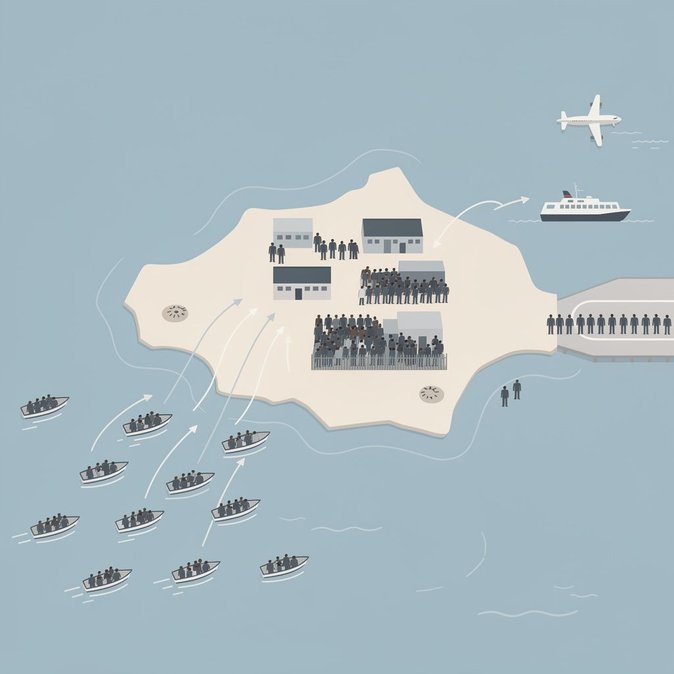
After several days of bad weather that temporarily slowed departures from Tunisia, sea arrivals to Italy resumed at pace overnight. Between midnight and early afternoon on 16 July, fifteen small boats carrying a total of 306 people were intercepted or landed autonomously on the island of Lampedusa. According to local authorities, most departed from the Tunisian port of Sidimansour; passengers include women and unaccompanied minors of Tunisian, Guinean and Ivorian nationality. A separate rescue operation brought 99 survivors aboard the NGO vessel Open Arms Uno to the port of Messina. The renewed influx immediately pushed the contrada Imbriacola hotspot back over its 350-place capacity, with nearly 400 occupants by midday despite an emergency transfer of 300 people to a quarantine ferry bound for Porto Empedocle. Interior-ministry officials ordered additional relocations to centres in Campania, Lazio and Lombardy, but logistics were complicated by ferry availability and limited accommodation farther north. Local business groups voiced concern that chronic overcrowding could jeopardise the island’s peak-season tourism just as international visitor numbers rebound. Tour-operators reported cancellations after images of migrants camping outside the reception centre circulated on social media. Hoteliers asked the government to send extra police and health staff to separate migration operations from tourist areas and to accelerate onward transfers to the mainland. For employers relocating staff to Sicily or routing executives through Lampedusa’s airport, the practical impact is two-fold. First, short-notice charter flights or fast-ferry tickets are harder to secure when the authorities requisition capacity for transfer operations. Second, heightened document checks for all disembarking passengers can add an hour to arrival procedures, immigration lawyers told clients. Companies are advised to monitor prefecture alerts and allow additional buffer time for domestic connections. The episode also underscores a structural challenge for Italy’s mobility infrastructure: search-and-rescue fluctuations can turn a tourist island into an emergency staging post overnight. Without more permanent reception space on the mainland, each surge risks ripple effects across Sicily’s airports, ports and hospitality sector – a dynamic that global mobility managers must now treat as a recurring, not exceptional, contingency.
Source: La Sicilia