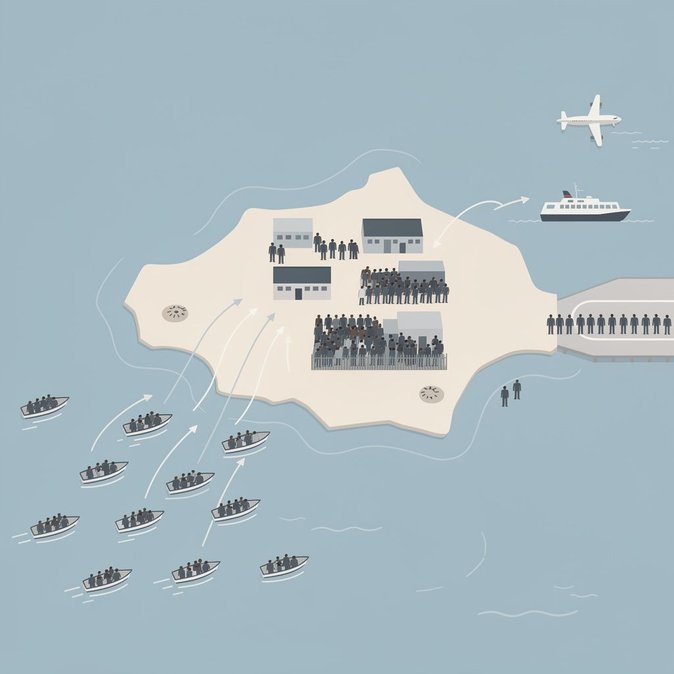
Hours after a fresh series of landings pushed Lampedusa’s hotspot over capacity, the ferry Paolo Veronese arrived at Porto Empedocle on the Sicilian mainland carrying more than 1,100 migrants for pre-identification. The improvised reception area at the harbour’s eastern pier quickly became congested, and scuffles broke out during the distribution of food and bottled water late on 15 July. Police in anti-riot gear intervened to restore order, and the prefect and questore of Agrigento were called on site. Local authorities blame the shortage of places in the national network of first-line reception centres, a problem exacerbated by summer tourist occupancy rates in hotels normally used for emergency accommodation. As an interim measure, the prefecture requisitioned a nearby sports complex, provoking protests from a local shopkeeper who feared damage to his business. Although the protest was withdrawn after assurances of compensation, the episode exposed growing friction between humanitarian obligations and community tolerance. From a mobility perspective, Porto Empedocle is a crucial link in the supply chain for the petro-chemical and agrifood industries of central Sicily. Yesterday evening’s unrest forced port authorities to suspend commercial truck boarding for two hours, delaying shipments of refrigerated goods. Freight forwarders were advised to divert via Catania until clearance operations stabilise. The incident also underlines the spill-over risk for cruise itineraries: two vessels scheduled to tender passengers to the nearby Valley of the Temples rerouted to Palermo to avoid potential security issues. Cruise-line shore-excursion teams have upgraded the port’s risk rating and recommended heightened vigilance for calls over the next week. Regional governor Renato Schifani renewed calls for a “fair and automatic” relocation mechanism among EU partners, echoing the European Commission’s findings that Italy needs more downstream capacity if the new Migration Pact is to function smoothly. In the short term, however, port and tourism operators must plan around ad-hoc closures and a visibly heavier police presence.
Source: La Sicilia