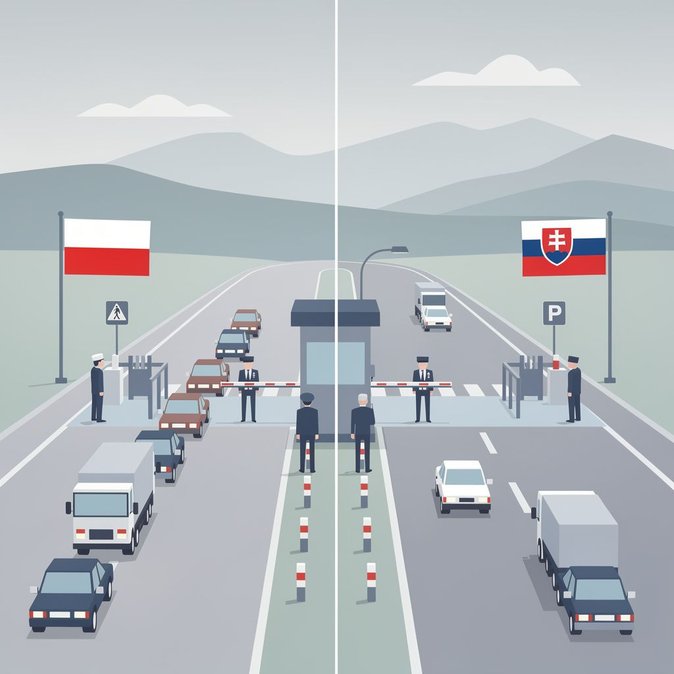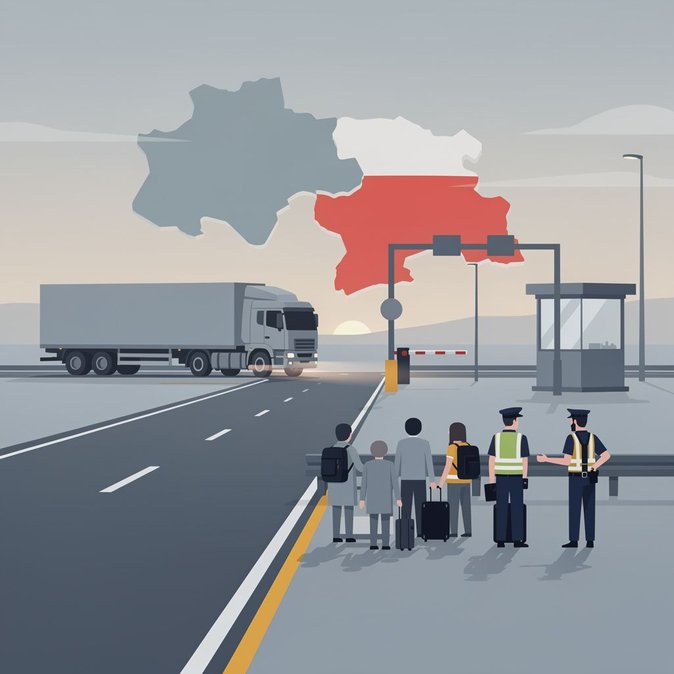
Poland’s Podlaskie Border Guard announced on 15 July the apprehension of five Somali nationals, one Moroccan and one Ethiopian who had walked across an un-fenced stretch of the Lithuanian-Polish border near Krasnopol the previous evening. The group lacked travel documents and intended to transit Poland en route to Germany, according to preliminary interviews. After biometric enrolment and Covid-status checks, officers initiated the simplified readmission procedure contained in the Polish-Lithuanian bilateral agreement of 2007. The migrants were transferred back to Lithuania at the Budzisko crossing within 12 hours, a turnaround the Border Guard highlighted as evidence of the “zero-tolerance” approach agreed by Warsaw and Vilnius in May. The incident illustrates a growing secondary migration route that bypasses heavily fortified Belarusian sectors. Since 1 July, Podlaskie units have recorded 43 attempted entries from Lithuania—already 60 % of the monthly total for June. Employers sponsoring non-EU nationals should note that overstays discovered during inland checks are now being cross-referenced with entry data from the forthcoming Entry/Exit System (EES), making compliance audits even more stringent. For corporates moving staff or equipment between Kaunas, Suwałki and Warsaw, the episode means more roadside spot checks and longer queues on the S61 Via Baltica. Logistics planners should build additional buffer time into just-in-time supply chains that cross the internal Schengen frontier.