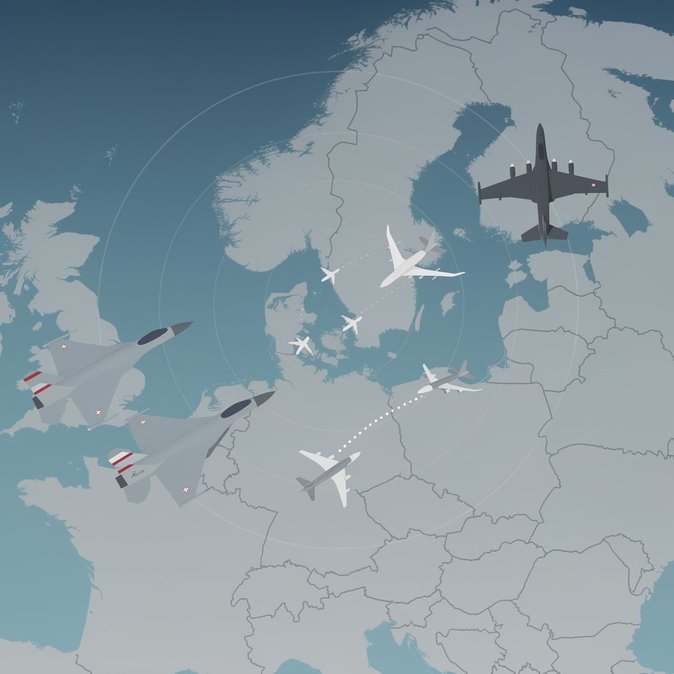
Polish Air Force quick-reaction aircraft were scrambled twice on the afternoon of 16 July after air-defence radars tracked unidentified traffic approaching Polish and Swedish flight-information regions over the Baltic. According to Defence Minister Władysław Kosiniak-Kamysz, a pair of Su-30 fighters flying from Russia’s Kaliningrad enclave was first intercepted some 90 km north-east of the Hel Peninsula, followed minutes later by an Il-20 electronic-intelligence platform that came as close as 30 km to the Polish coast near Jastrzębia Góra. All three aircraft were operating with transponders switched off and had filed no flight plans, prompting Polish, then Swedish, fighters to carry out visual identification and escort. Although the intruders remained outside Polish sovereign airspace, the repeated intercepts are the third in as many days and underline the volatile security climate over sea lanes used by scores of scheduled passenger flights from Warsaw, Gdańsk and the Nordic capitals. Civil operators received a short-notice NOTAM instructing crews to maintain continuous contact with Warsaw ACC and be prepared for tactical reroutes east of longitude 018°E in the event of further military activity. The Ministry of Infrastructure said no services were cancelled, but several LOT Polish Airlines and Ryanair Sun flights accepted minor deviations adding 4-8 minutes to sector time. Airport ops managers at Gdańsk and Warsaw Chopin reiterated that heightened air-policing activity does not affect terminal operations but advised business-aviation dispatchers to build additional fuel margins into flight plans for north-bound routings. Strategically, the spike in Russian probe flights comes amid wider warnings of potential “limited hybrid” actions against NATO critical infrastructure (see separate story) and is likely to accelerate Poland’s plan to install an enhanced radar coverage layer feeding directly into EUROCONTROL’s Network Manager. For multinational companies moving staff through Polish hubs, the incidents are a reminder to refresh travel-risk briefings and to register itineraries so that security teams can react quickly to airspace disruptions.
Source: Polska Agencja Prasowa (PAP)