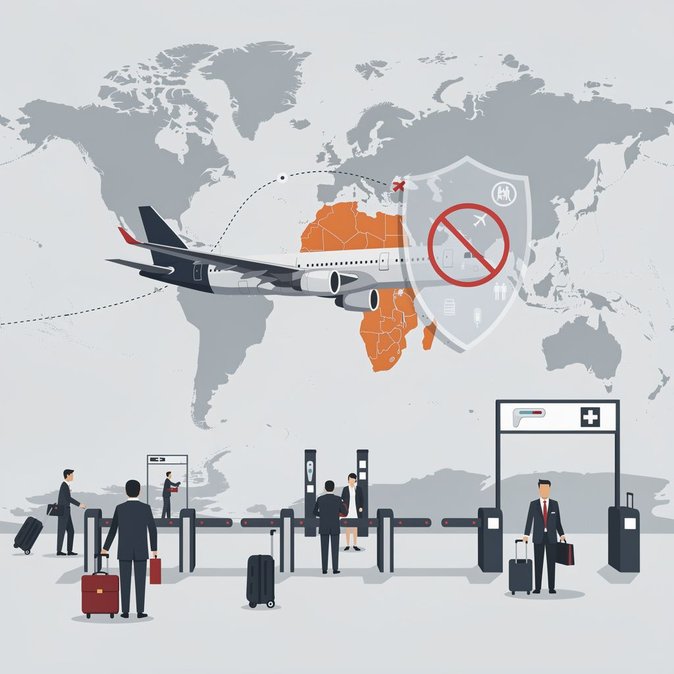
The Centers for Disease Control and Prevention (CDC) on 25 June 2026 quietly filed an Order—published 16 July—for another 30-day suspension on the “right to introduce” persons who have been in specified Ebola-affected countries within the previous 21 days. Issued under Sections 362 and 365 of the Public Health Service Act, the measure runs through 21 July 2026 and can be renewed at the Director’s discretion. The Order blocks entry of most non-citizens and non-residents who have recently been in the Democratic Republic of the Congo, Uganda or neighbouring high-risk states, unless they qualify for narrow humanitarian or diplomatic exemptions. Airlines must funnel any exempt travellers through one of 11 designated U.S. airports where enhanced screening is available. The action follows CDC’s May and June emergency directives and responds to a cross-border spike in Ebola cases along the DRC-South Sudan corridor. Industry group Airlines for America filed comments urging a “more risk-informed” approach—such as targeting provinces rather than entire countries and expanding the list of arrival airports. CDC declined, citing rapidly evolving epidemiological data. Carriers remain responsible for advance passenger manifests and may face fines for non-compliance. For multinational employers, the extension means continued routing constraints for project staff rotating through central Africa. Companies should revisit crisis-management plans, confirm medical evacuation coverage and alert travellers that itineraries transiting banned countries—even without deplaning—could trigger denial of boarding to the United States. Supply-chain managers moving technicians or engineers to mining and energy projects in the region should budget extra time for third-country quarantines or remote work alternatives until the outbreak subsides.
Source: Federal Register