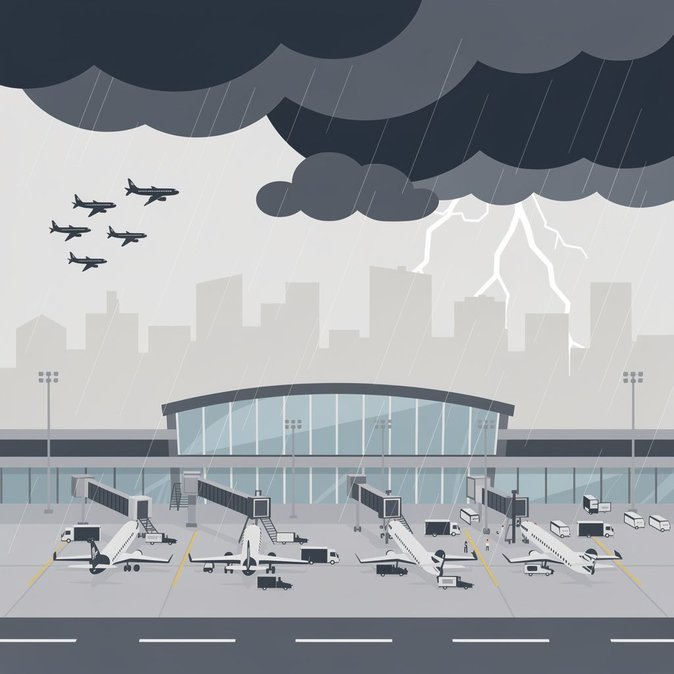
Severe thunderstorms that swept across central and north Texas on 15 July 2026 paralysed airline schedules well into 16 July, generating 3,636 delays and 83 cancellations across the United States. The Federal Aviation Administration imposed ground stops at Dallas–Fort Worth International (DFW) and Dallas Love Field (DAL), while knock-on crew and equipment shortages rippled through Chicago O’Hare, Washington Reagan National and other hubs. DFW logged 693 delays—the highest single-airport total—followed by Chicago O’Hare with 260. American Airlines, whose largest hub is at DFW, accounted for 577 delayed flights. Regional carrier PSA Airlines suffered the highest cancellation rate, scrubbing 19 services. The National Weather Service recorded flash-flooding and at least one tornado touchdown near San Antonio, underscoring the intensity of the convective system. Under U.S. Department of Transportation rules, airlines must refund passengers for cancelled flights, but they are not required to provide meals or hotel rooms when the cause is weather. Travellers faced average departure holds of 45 minutes and struggled to rebook because aircraft and crews timed-out under FAA Part 117 duty-hour limits. Corporate travel managers should alert employees to expect residual disruptions for 24-48 hours as carriers reposition aircraft. When booking tight connections during the peak summer weather season, a three-hour buffer is advisable for self-connecting itineraries through DFW or other storm-prone hubs. Organisations with mission-critical travel may wish to authorise refundable fares and same-day backups on competing carriers until the unstable weather pattern moves east.
Source: Nomad Lawyer