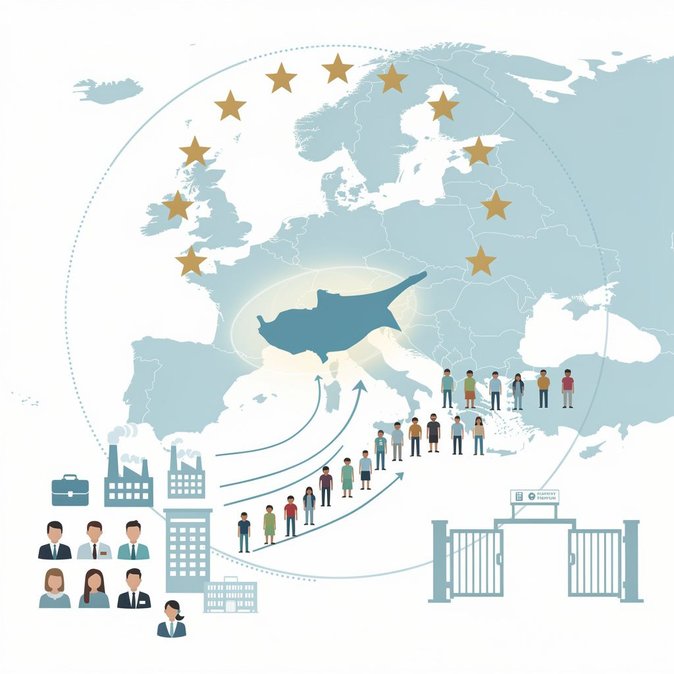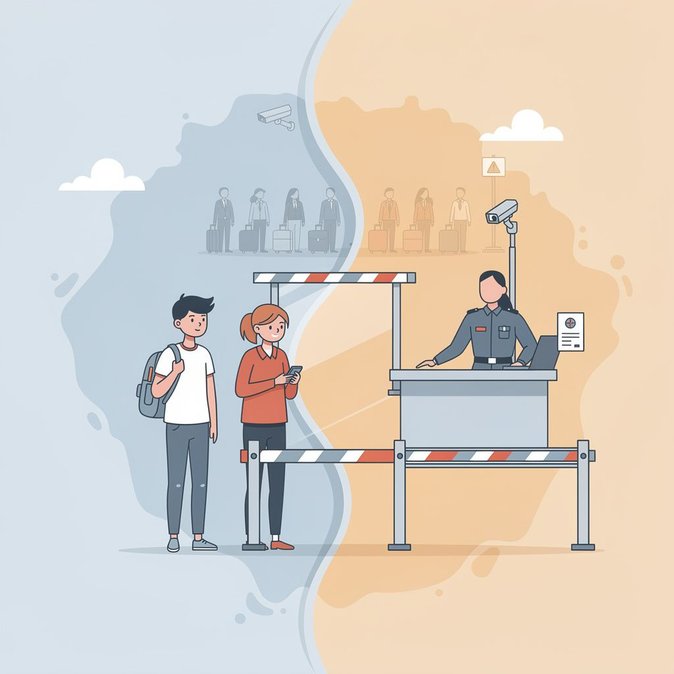
Two 19-year-old Greek Cypriots discovered this week just how strictly the de-facto border that bisects Cyprus is policed. The pair inadvertently drove through the Pyrgos Tyllirias crossing on 16 July without submitting to Turkish-Cypriot inspection, then attempted to exit the north the same day at Astromeritis. They were arrested, taken before a military court in the occupied part of Nicosia and fined 500 Turkish lira each—roughly €9—before being released on 17 July. Although the penalty was symbolic, the case is a timely reminder that the “Green Line” remains an external border for immigration purposes until Cyprus joins Schengen. Travellers—EU nationals included—must stop at both Greek-Cypriot and Turkish-Cypriot control points, present identification and, where required, fill in entry slips. Failure to do so can lead to detention, a court appearance and, for foreign visitors, refusal of future entry into the north. For businesses that routinely shuttle staff across the divide—especially construction, utilities and NGO projects operating in the buffer zone—the incident underscores the need for internal briefings on crossing protocols. Companies should ensure drivers know which crossings are open to non-EU citizens and that any commercial equipment is declared on both sides to avoid confiscation under counter-smuggling rules. The episode also touches on wider EU mobility issues. Once Cyprus completes its long-awaited accession to the Schengen Area, the Green Line will become a peculiar internal frontier: free movement rights will apply only on the government-controlled side, while the non-recognised north will remain outside the zone. Brussels and Nicosia are already discussing a tailored regime that would allow continued crossings without undermining Schengen security standards. Until those arrangements are finalised, however, employers should treat the Green Line as a hard border. The minimal fine imposed on the two teenagers should not mask the fact that more serious sanctions—including entry bans—can be applied, particularly to third-country nationals working without authorisation in the north.
Source: KNEWS