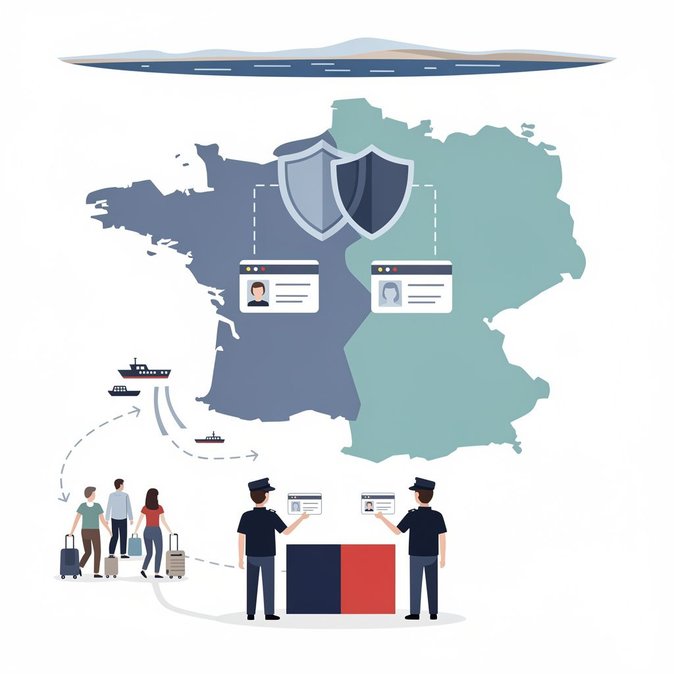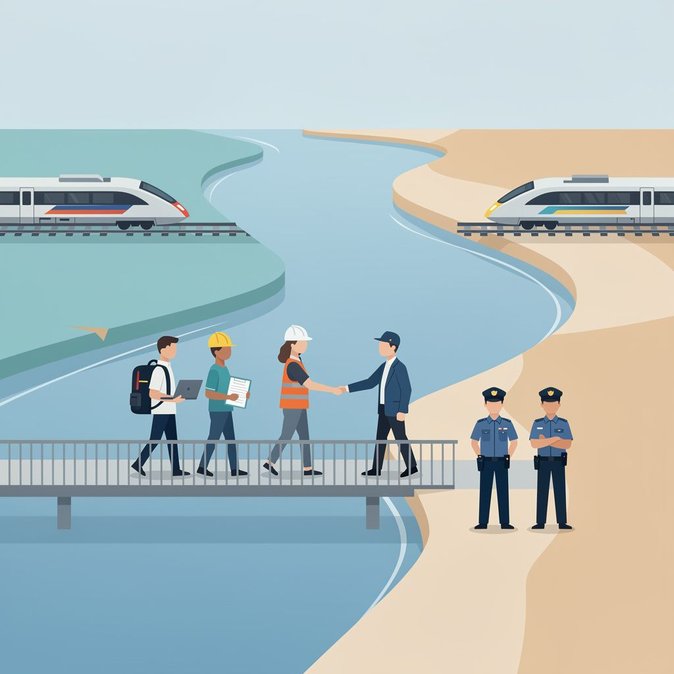
Meeting at Nörvenich Air Base on 17 July, the 26ᵗʰ Franco-German Ministerial Council adopted a detailed action plan to “remove the obstacles our border populations are facing, from apprenticeship to mobility and healthcare.” The communiqué commits both governments to simpler booking for cross-border regional trains, accelerated approval of new rail lines and an expansion of the Lauterbourg vocational-training scheme that lets apprentices live on one side of the Rhine and work on the other. The two neighbours also agreed to finalise by year-end an inter-governmental police-and-customs accord that will coordinate internal border checks and joint fight against irregular migration, building on Article 23a of the Schengen Borders Code. In a nod to corporate mobility, Berlin and Paris will lobby Brussels to streamline work-permit portability for EU Blue-Card holders operating in the Upper Rhine economic zone. For companies with staff shuttling between Strasbourg, Karlsruhe and the Basel tri-border, the headline is predictability: harmonised ticketing and mutual recognition of vocational qualifications should cut compliance friction. HR departments should prepare to leverage the expanded cross-border apprenticeship quotas as a talent pipeline, particularly in engineering and advanced manufacturing. The announcement follows persistent criticism from chambers of commerce that lengthy customs formalities and incompatible rail timetables hamper a region generating €230 billion in annual GDP. Pilot projects will focus on real-time data sharing between SNCF and Deutsche Bahn, automatic fare integration and a Franco-German digital ID for commuters. If successfully implemented, the initiatives could serve as a template for other EU border regions, offering a glimpse of how bilateral action can complement—rather than wait for—Schengen-wide reforms.
Source: Élysée Palace