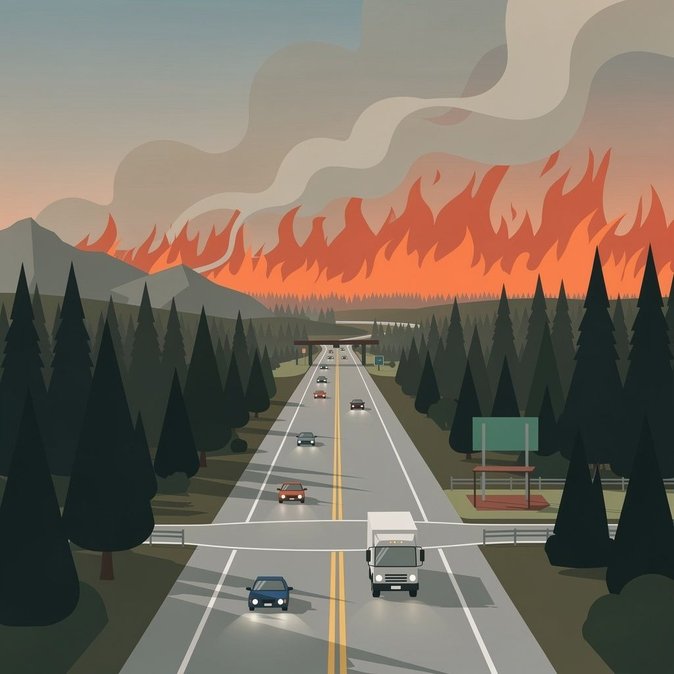
Nova Scotia’s Department of Natural Resources confirmed Sunday morning (July 19, 2026) that the Mooseland Road wildfire burning 100 km northeast of Halifax is now classified as “being held.” Firefighters have stopped the blaze—estimated at 1,447 ha—from spreading under current weather conditions, but suppression work with heavy equipment continues. For travellers, the most immediate impact is the ongoing closure of Mooseland Road at Highway 7, a key connector for cottage communities and outdoor‐recreation sites east of Halifax. Authorities are urging motorists to detour well in advance and to avoid parking on highway shoulders to watch fire-fighting aircraft. Halifax Stanfield International Airport remains fully operational, but airlines report minor delays on inbound flights during periods of reduced visibility caused by smoke plumes drifting toward the coast. Although evacuations earlier in the week have largely ended, the province’s Emergency Management Office is maintaining an alert status. Visitors with holiday rentals in the Musquodoboit Valley are advised to confirm local road access and to pack N-95 masks, as Environment Canada’s Air Quality Health Index (AQHI) reached 7 (high risk) overnight before improving Sunday afternoon. Business travellers should factor extra drive-time into Monday meetings in Dartmouth and eastern Halifax Regional Municipality; ride-share wait-times and courier pickups have lengthened as back-roads remain closed. Corporate mobility managers relocating staff to HRM this month may wish to postpone house-hunting trips in the affected corridor until smoke conditions stabilize. The incident is a reminder that Canada’s Atlantic provinces—traditionally seen as wildfire-safe—are now part of the national pattern of climate-driven travel disruptions. Companies with cross-country duty-of-care programs should include Nova Scotia in their wildfire protocols, monitor provincial advisories, and ensure transferees have flexible accommodation and routing options.
Source: Global News