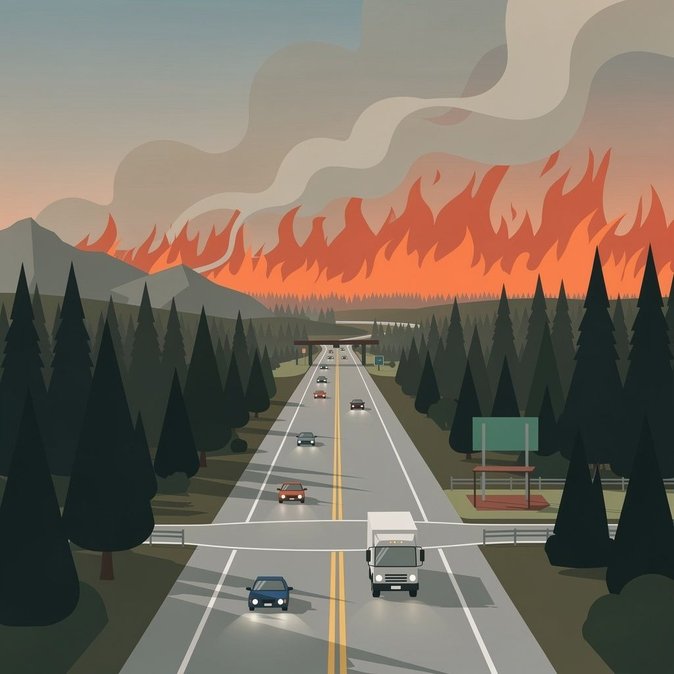
Parks Canada issued a detailed Sunday update (July 19) on the Bear Creek Wildfire Complex inside Wood Buffalo National Park, straddling the Alberta–Northwest Territories border. Improved mapping shows the complex has burned 48,494 ha; however, officials stress that Highway 5—vital for access to Fort Smith and for tourism traffic heading to the Northwest Territories—“is not closed,” contradicting erroneous online map data that had indicated a shutdown. The agency has deployed 60 firefighters, 11 helicopters and an incident-management team, but thick smoke continues to ground aircraft intermittently and reduce visibility on area highways. Northern winds are expected to blow smoke across Highway 5 throughout the day, and motorists are advised to use headlights and check DriveNWT before departure. For mobility managers, the headline is continuity of ground transport: corporate vehicles, relocation trucks and seasonal staff shuttles serving mine sites and infrastructure projects in the region can still operate, albeit with caution. Lodging providers in Fort Smith report near-full occupancy due to fire crews, so companies scheduling site visits should book accommodation well in advance or consider remote meetings. The update also details progress on three major fires—2026WB017, WB019 and WB020—with containment ranging from 25 % to 83 % of perimeters. Drone scans identified 100 hotspots overnight, a sign that crews may need weeks of mop-up even after active flames subside. Parks Canada encourages travellers to sign up for email alerts and reminds drone operators that flight restrictions remain in place over the park. With wilderness tourism season at its peak, firms coordinating expatriate rotation programs or incentive trips should brief participants on smoke exposure, have medically-fit masks on hand, and arrange contingency evacuation routes north toward Yellowknife or south toward High Level, Alberta, should Highway 5 conditions deteriorate.