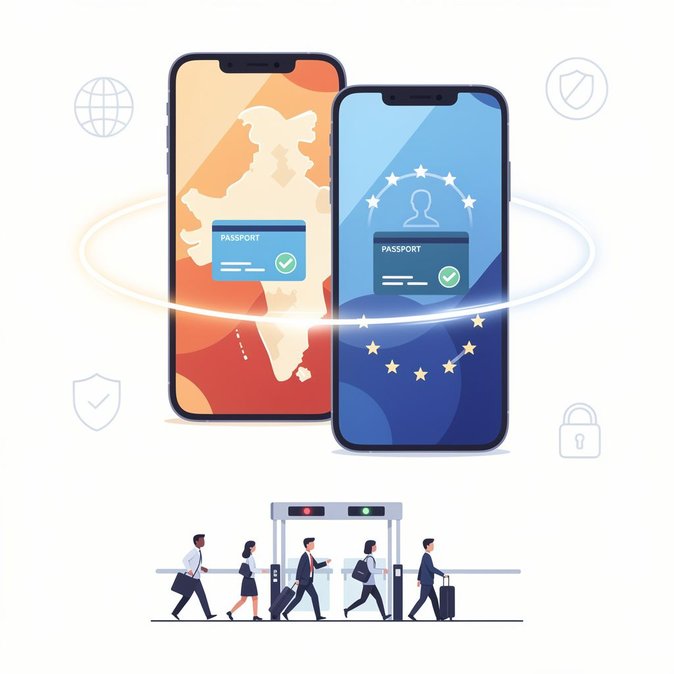
At the third ministerial meeting of the India-EU Trade and Technology Council (TTC) in Brussels, co-chaired on 15 July and reported in detail on 18 July, negotiators approved a pilot project that will connect the European Union’s forthcoming Digital Identity Wallet with India’s DigiLocker platform. The decision, tucked into a broader communiqué on semiconductors, AI and clean-energy supply chains, could remove one of the thorniest pain-points for cross-border mobility: real-time verification of passports, visas and professional credentials. Under the pilot, a small group of Indian professionals travelling on business Schengen visas will be able to preload verified copies of their passport biodata page, Indian driving licence and university degree certificates into DigiLocker. On arrival in the EU, border agents and potential employers will authenticate those documents using the same secure APIs that European citizens will use inside the single market. Reciprocally, EU executives visiting India will be able to share wallet-attested ID documents with Indian immigration and hotel authorities, replacing the current paper photocopy routine. For multinationals, the implications are significant: faster immigration queues, smoother KYC checks for temporary bank accounts and a potential template for accepting e-signatures on local employment contracts. Consultancy firms estimate that fully digital document flows could shave 30–45 minutes off each airport arrival and reduce onboarding time for short-term assignees by up to a week. The pilot will run for six months with technical oversight from India’s National e-Governance Division and the EU’s Directorate-General for Communications Networks. Privacy safeguards include mutual recognition of each side’s data-protection adequacy decisions and user-controlled consent logs. If successful, officials envisage expanding the scheme to cover professional licences (doctors, architects), customs carnets and even digital work permits once the long-negotiated India-EU Free Trade Agreement is in place. Companies should watch for a call-for-participants in August; eligibility is expected to favour firms already using India’s DigiLocker corporate issuer framework or EU eIDAS-notified solutions. Early adopters stand to influence technical standards that may become the default for future mobility corridors between major economies.
Source: ETGovernment