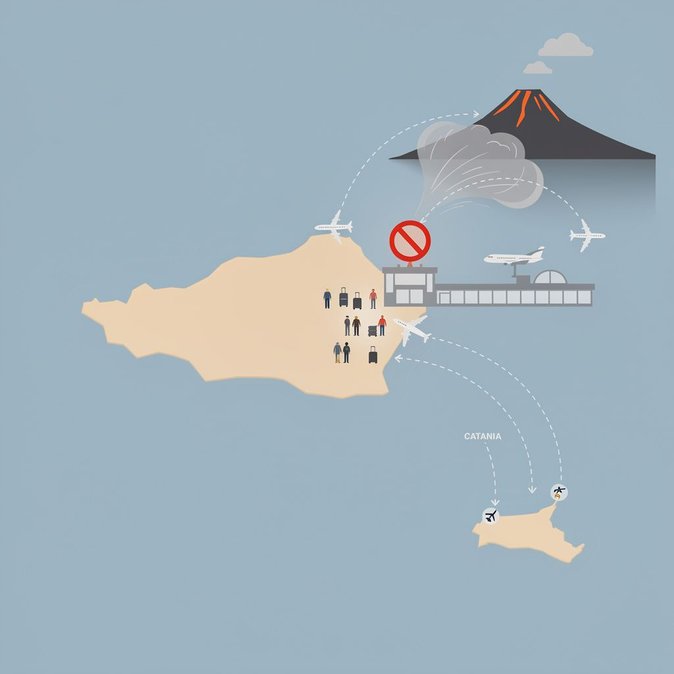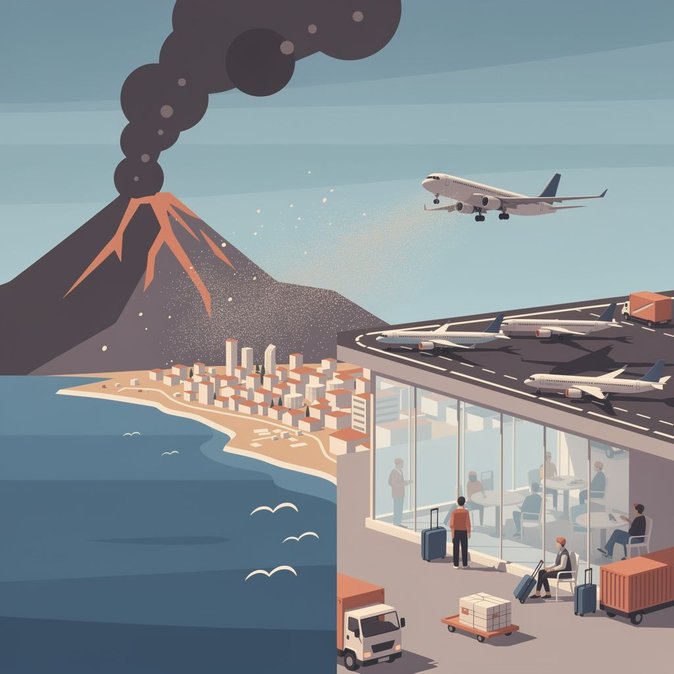
Mount Etna roared back to life overnight, ejecting a dense ash plume that forced the closure of sector B2 of Sicilian airspace and halted all arrivals at Catania–Fontanarossa Airport until at least 19:00 local time on 19 July. Departures were initially allowed but later limited as ash drifted south-east. The airport operator SAC urged passengers to contact airlines before heading to the terminal.citeturn9search0 This marks the third operational shutdown in four weeks. Since the eruption sequence began on 26 June, more than 600 flights have been cancelled and 300 diverted to Palermo, Comiso and Trapani. Today alone, 75 services were affected by diversions or cancellations. Freight forwarders report rerouting of perishable cargo to Naples, adding up to 12 hours in transit time for southern-Italy supply chains.citeturn9search2 Meteorological models from INGV reduced the aviation colour code from red to orange mid-afternoon, but airport authorities kept the arrival ban in place pending runway cleaning. Volcanic ash, a high-silica abrasive, can stall jet engines and contaminate sensors, prompting strict International Civil Aviation Organization (ICAO) safety protocols. EasyJet and Ryanair have waived change fees for 19-20 July Sicily services.citeturn9search4 For corporate mobility managers, the incident underlines the need for real-time monitoring of natural-hazard alerts. Companies with semiconductor and fashion-logistics operations in Catania’s industrial zone activated work-from-home protocols for non-essential staff. Travel risk consultants recommend holding flexible hotel blocks in Palermo as Etna’s activity is expected to remain elevated over the coming days.citeturn9search3
Source: La Sicilia