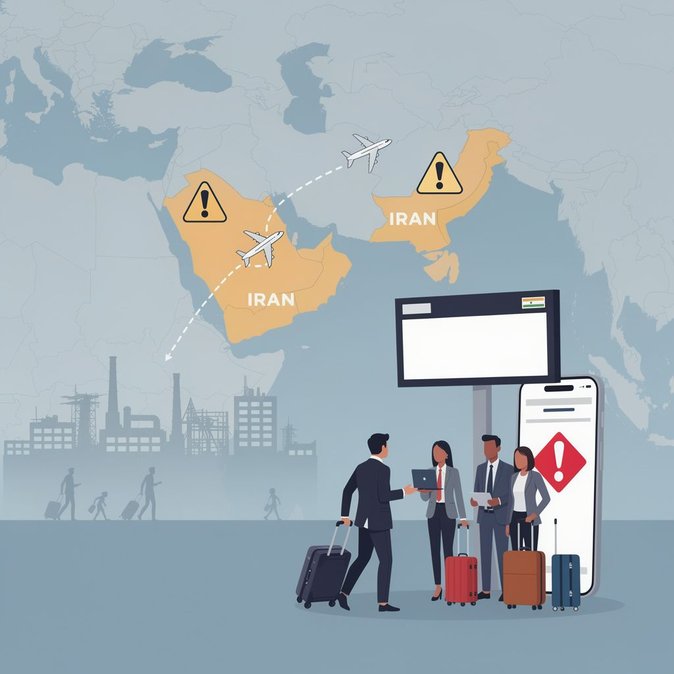
The Indian Embassy in Tehran issued an urgent travel advisory in the early hours of 20 July 2026, asking Indian nationals to defer all non-essential trips to Iran until the security situation stabilises. The advisory comes against the backdrop of intensified US-Iran hostilities, missile strikes on southern Iranian ports and sporadic civil-unrest incidents in Tehran. Embassy officials cited a ‘sharp increase in instability and conflict-related incidents over the past 48 hours’, including drone attacks near Bandar Abbas and cyber-intrusions targeting critical infrastructure. Indians already in Iran have been urged to register with the mission, maintain a high level of caution, avoid military or protest flash-points and consider leaving on commercial flights while they remain available. For multinational companies operating rotation schedules or short-term projects in Iran, the advisory effectively halts travel-in authorisations and may trigger force-majeure clauses in contracts that depend on on-ground Indian technicians or project managers. Mobility managers are advised to map Indian head-count currently in Iran, verify insurance coverage for conflict zones and activate evacuation or work-from-third-country plans where feasible. The warning also highlights a growing trend: Indian embassies are becoming more proactive in issuing granular security guidance that directly affects corporate travel compliance programmes. Firms with large Indian workforces should ensure that crisis-management protocols automatically ingest such embassy alerts so that bookings, per-diem approvals and duty-of-care notifications are blocked or rerouted in real time. Should the conflict widen to the Strait of Hormuz, air-space closures could further hamper evacuation efforts and disrupt cargo links between India and the Middle East. Contingency planning for alternative routings via Muscat or Doha is therefore recommended.
Source: NDTV Profit