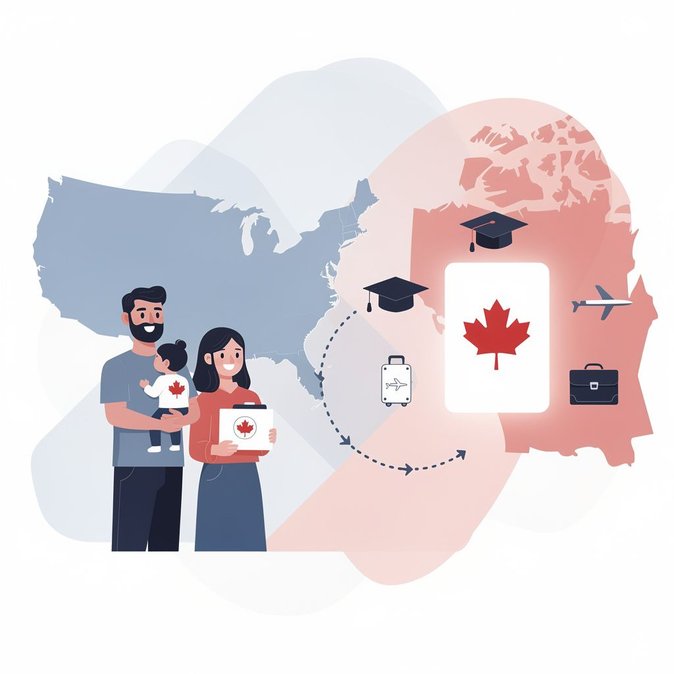
A feature published on July 21 reveals a sharp uptick in American families leveraging Bill C-3—passed in December 2025—to claim Canadian citizenship for their children through ancestry. Since the law simplified proof-of-citizenship rules, IRCC has received tens of thousands of additional certificate applications from U.S. residents who discovered a Canadian grand-parent or great-grand-parent in their family tree. Parents cite multiple drivers: dramatically lower university tuition for Canadian citizens, access to subsidised healthcare if residency is established, and broader career horizons through International Experience Canada (IEC) youth-mobility visas that allow Canadians to work in more than 35 partner countries. The Henley Passport Index now ranks the Canadian passport higher than the U.S. document, adding to its appeal as a “plan B” in an uncertain geopolitical climate. For Canadian employers with cross-border talent pipelines, the trend could expand the pool of North American candidates who already hold citizenship and therefore bypass work-permit requirements. Universities and HR departments, however, may need to update enrolment or onboarding processes to verify the authenticity of recently issued citizenship certificates. Immigration lawyers caution that children born abroad to Canadian-born parents must still meet a future physical-presence test if they wish to pass citizenship to the next generation. Families are therefore weighing the benefits of spending formative years—or at least three cumulative years—in Canada. The article recommends that applicants assemble complete documentary evidence—birth and marriage certificates, long-form registrations, and proof of lineage—to avoid costly rejections and prolonged processing that could affect study-permit and tuition-fee deadlines.
Source: CIC News