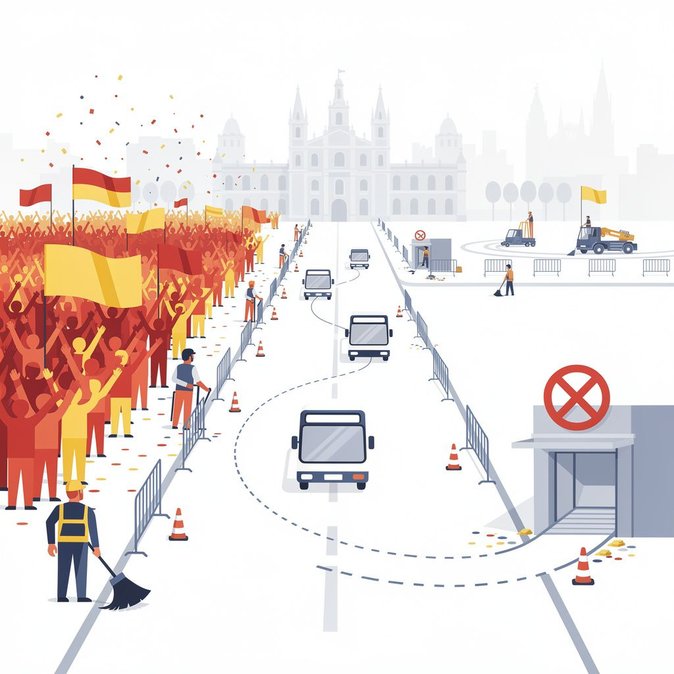
Madrid’s triumphal celebration of La Roja’s World-Cup victory on 20 July turned the city centre into a pedestrian zone and disrupted mobility well into 21 July. A million fans lined the route from Moncloa to Plaza de Cibeles as the open-top team bus crawled through Princesa, Génova, Colón and Alcalá. To manage the crowd, City Hall activated a Level-2 mobility plan: closing key arterials from 18:00 to 23:00, suspending kerb-side parking and diverting more than 40 EMT bus lines, including the Exprés Aeropuerto service used by business travellers. Metro de Madrid boosted frequencies on lines 1, 2, 3 and 4 but sealed Banco de España station from 18:00 until end of service. Cercanías commuter trains imposed speed restrictions through Recoletos tunnel, and taxi ranks around Prado and Paseo de Recoletos were temporarily relocated. The regional transport consortium CRTM published real-time updates warning travellers of first-mile/last-mile disruption, while the airport authority Aena advised arriving passengers to allow an extra hour to reach hotels. Clean-up and stage dismantling continued through 21 July, extending deviations for daytime buses and restricting delivery vans in the Cibeles perimeter. Corporate-travel managers reported missed evening flights and urged employees to use Chamartín or Nuevos Ministerios stations instead of the saturated Sol hub. With Spain hosting a trio of eclipses from 2026-28 and another mega-event (the Pope’s visit) scheduled for October, the municipality says it will replicate the World-Cup mobility template. Employers planning relocation-day moves, household-goods shipments or VIP site visits during future mass gatherings should now factor in overnight street closures and stand-by hotel contingencies.
Source: El País / CRTM