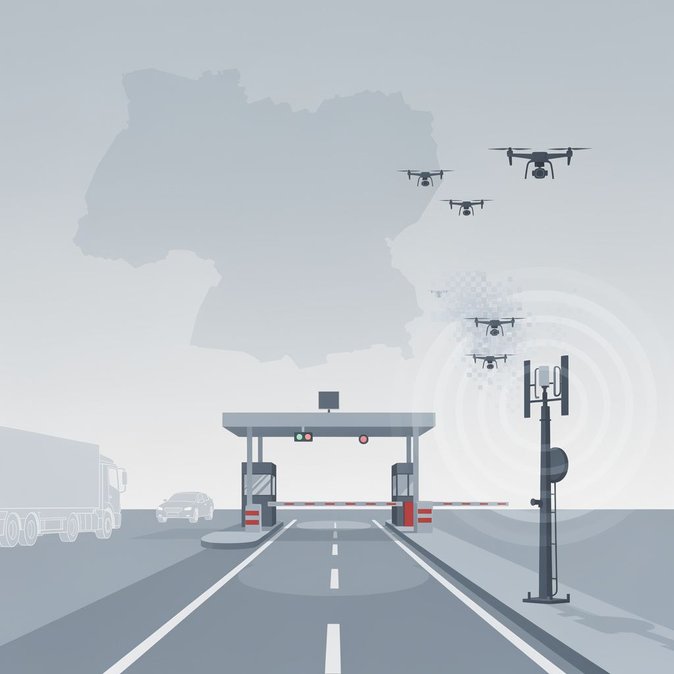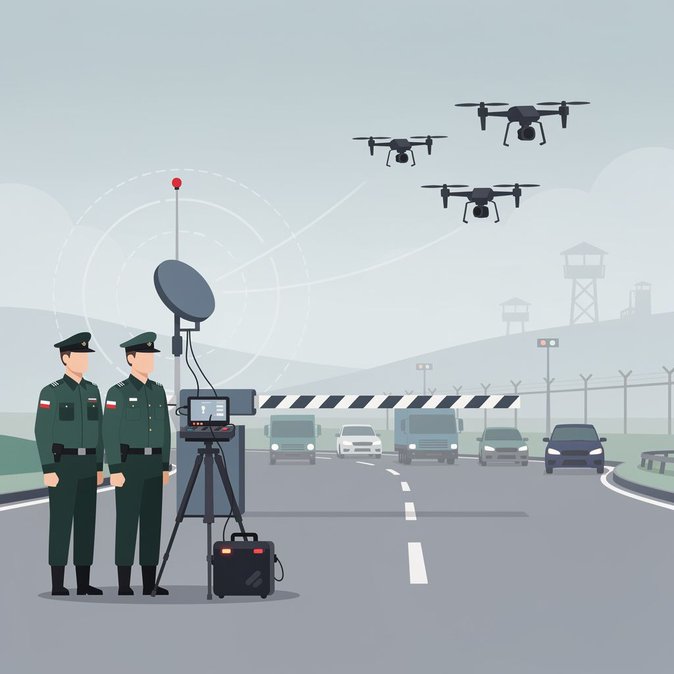
After a meeting of the Cabinet Committee for National Security on 21 July, Deputy Prime Minister and Defence Minister Władysław Kosiniak-Kamysz told reporters that the government will finance advanced anti-drone technology for the Polish Border Guard as part of a broader frontier-security upgrade. The announcement comes amid persistent hybrid-threat concerns along the 418-km frontier with Belarus. According to the minister, “no one managed to cross the Polish-Belarusian border illegally this week,” but Russia’s capture of Ukrainian UAVs poses new risks of aerial provocations against NATO’s eastern members. For mobility managers the investment is a double-edged sword. Enhanced surveillance and counter-UAS gear should shorten wait times by automating checks at key crossings such as Kuźnica and Terespol, yet the roll-out phase could bring intermittent closures and more rigorous vehicle screening. Logistics providers are already factoring in extra dwell time following last year’s installation of the 186-km electronic barrier. Kosiniak-Kamysz also revealed that Poland will bid to host NATO’s new fuel-pipeline construction centre, a dual-use facility that could bolster civil energy security and military mobility. If successful, the hub would stimulate infrastructure spend in eastern regions and improve redundancy for road tankers diverted by border disruptions. Businesses with frequent staff rotations across the eastern border should monitor procurement timelines and maintain contingency routing via Lithuania or Slovakia until the technology is fully operational.
Source: Polska Agencja Prasowa (PAP)