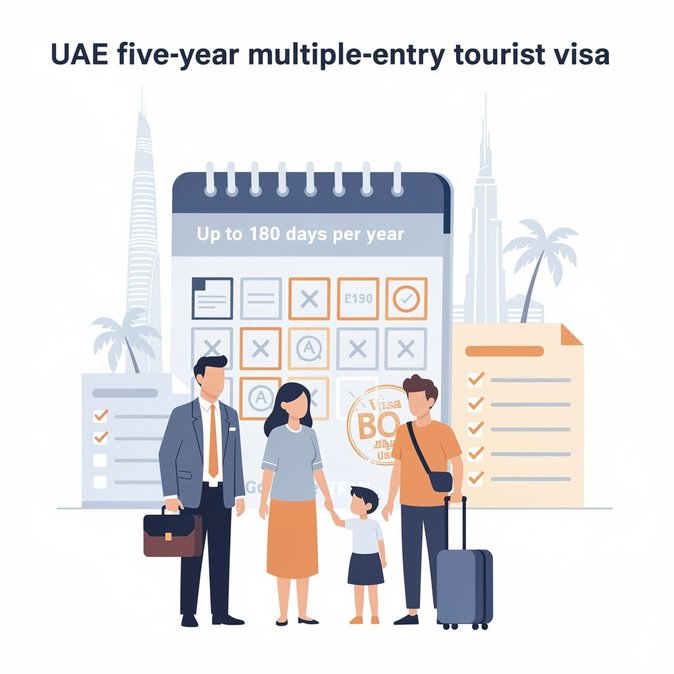
Khaleej Times published an in-depth explainer on 22 July 2026 detailing fees, eligibility and common pitfalls for the UAE’s five-year multiple-entry tourist visa—an increasingly popular option for frequent flyers and business families. Although the visa was first approved in 2021, demand has spiked after several airlines restored full schedules and hotel rates softened this summer. The permit allows nationals of any country to stay up to 90 days per entry, with one annual extension to a total of 180 days. Applicants must show a six-month bank balance of at least US$4,000, hold health insurance and pay a refundable security deposit (Dh 3,000–3,025). Processing time through ICP or GDRFA channels averages 48 hours, but advisers warn that incomplete online forms trigger automatic rejection after 30 days. For corporates, the visa offers a flexible alternative to repeated short-stay permits, particularly for board members who need to visit UAE subsidiaries several times a year without switching to residency. Mobility managers should, however, monitor the 90/180-day limits: overstays wipe out the security bond and can jeopardise future applications. The article also compares fee structures across digital and in-person channels and clarifies refund rules—helpful guidance as some applicants had struggled to reclaim deposits under the previous system. Travel insurers are positioning tailored policies that bundle visa-refund coverage with COVID-19 and regional travel-disruption clauses. With neighbouring Gulf states exploring similar long-term tourist visas, the UAE’s model is setting a regulatory benchmark. Experts expect future tweaks—such as biometric wallets or automatic ETAs—to streamline renewals before Dubai hosts Expo City’s Smart Tourism Forum in 2027.
Source: Khaleej Times