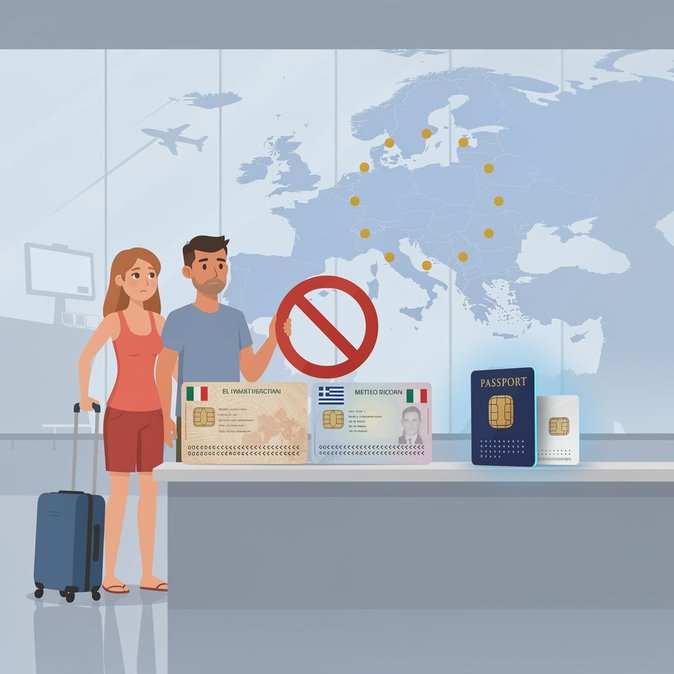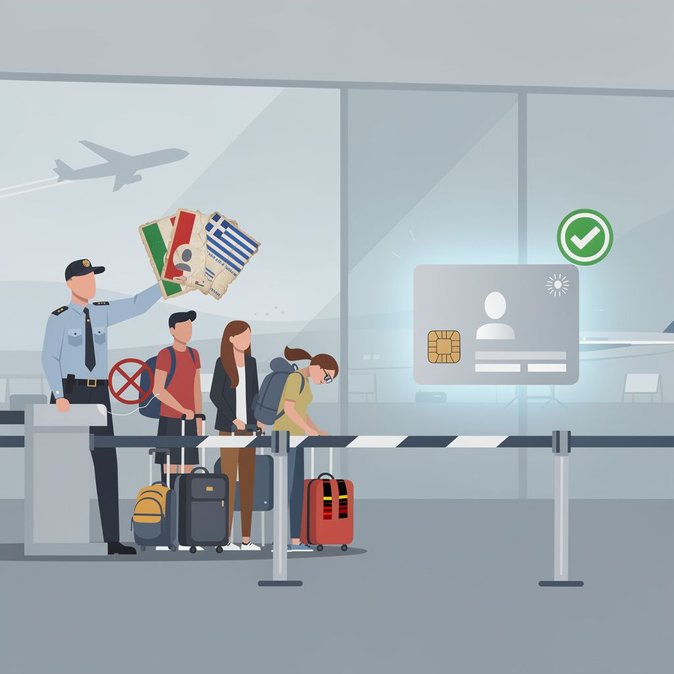
Brussels South Charleroi Airport issued an unusually blunt warning on 22 July 2026: Italian and Greek nationals living in or visiting Belgium who still carry the old paper identity card will be denied boarding from 3 August. The alert followed a silent but far-reaching EU Regulation adopted back in 2019 that obliges member states to phase out insecure identity documents in favour of biometrically enabled plastic cards. Italy is scrapping the paper booklet altogether; Greece will keep it for domestic use until 2027 but not for cross-border travel. From 3 August only the new Electronic Identity Card (EIC) with an embedded chip and QR code will be accepted at check-in desks and Schengen border posts. Charleroi says it prefers to warn now to avoid scenes of holiday-makers being « stranded here for the summer ». Brussels Airport is expected to post similar notices in the coming days. The practical impact is significant. About 120,000 Italians and 30,000 Greeks are registered residents in Belgium; thousands more commute on seasonal contracts. Airlines serving southern-Europe routes will need to retrain staff and update document-verification apps. Employers should remind expatriate workers planning home leave of the change; a Belgian residence permit alone is **not** a travel document. Italian citizens abroad may request the EIC at any Italian municipality starting 1 June, while Greek nationals must book an appointment at police offices in Greece. Processing times vary from 24 hours in urban Italy to ten days in popular Greek islands—close to the departure-tax holiday peak—so mobility planners should build in buffer time. The episode underscores how EU security legislation can suddenly bite years after enactment. Companies managing cross-border staff movements through Belgium should maintain a compliance calendar for document-expiry milestones and ensure travellers receive timely alerts to avoid costly last-minute re-ticketing.
Source: The Brussels Times