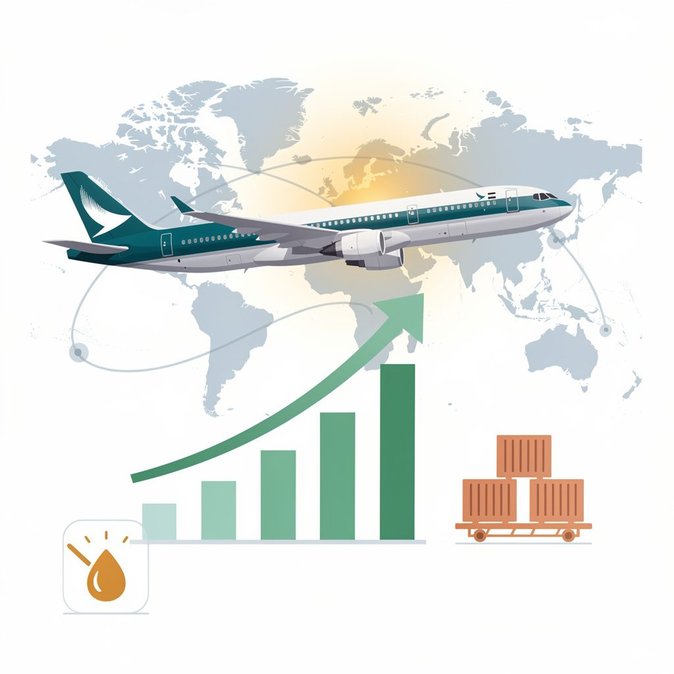
Hong Kong’s flag-carrier signalled on 22 July that its turnaround from the pandemic doldrums is accelerating, projecting group net profit of HK$6.0-6.5 billion (US$765-829 million) for the six months to 30 June—up to 76 per cent higher than the same period in 2025. In a filing cited by The Business Times, Cathay said underlying earnings growth is powered by 17 per cent higher passenger volumes and a 9 per cent jump in cargo tonnage, with semiconductor and pharmaceutical shipments filling freighters. Chief Customer & Commercial Officer Lavinia Lau reported that premium-cabin demand from corporate travellers “remains robust”, and that long-haul summer bookings are outpacing 2025 levels despite surging fuel prices. The airline also booked a one-off HK$1.4 billion gain from partial dilution of its stake in Air China, but analysts at HSBC estimate core operating profit still beat consensus by 15 per cent. Capacity (ASKs) in June was 6 per cent above last year and management reiterated a 10 per cent seat-growth target for 2026. For global-mobility teams the outlook is positive: Cathay confirmed it will keep its expanded long-haul schedule through October, easing the seat crunch that forced firms to pay premium fares in 2024-25. However, jet-fuel costs—forecast by IATA to average US$152 per barrel this year—could pressure ticket prices later in 2026. The carrier hinted at selective fuel surcharges if Brent crude stays above US$110. Cathay’s update caps a week of upbeat signals for Hong Kong’s aviation sector, including record June passenger throughput at the airport and signs that Mainland Chinese carriers are rerouting Middle East-bound traffic via Hong Kong. Business-travel specialists predict that seat availability on key finance routes to New York and London will reach 85 per cent of 2019 capacity by Q4.