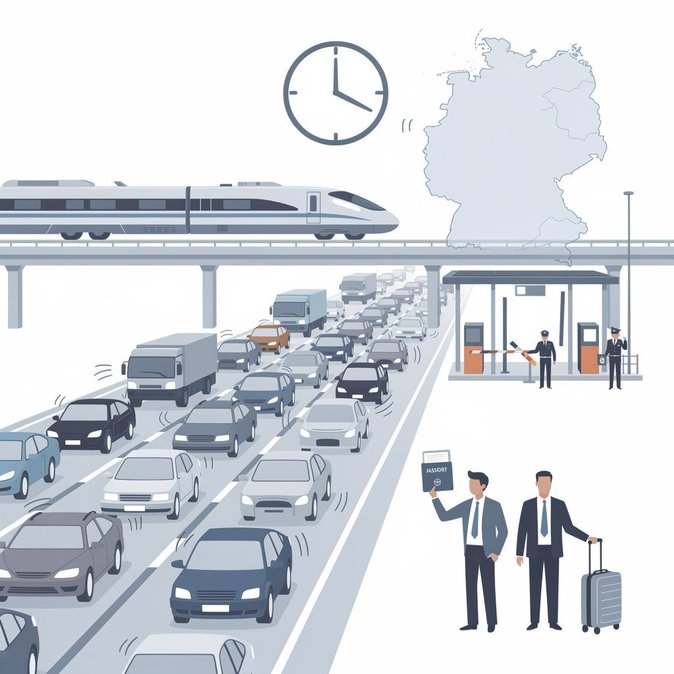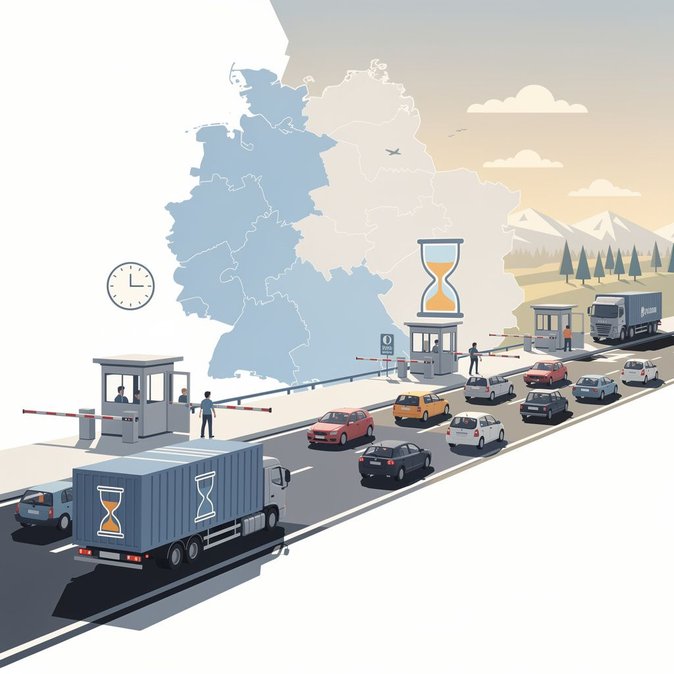
The European Commission’s consolidated table of Schengen notifications, updated 24 July 2026, confirms that Germany is maintaining its internal border controls from 16 March to 15 September 2026. Berlin cites ‘continued high levels of irregular migration and migrant smuggling’ as well as the pressures on asylum reception capacity. Checks apply on land borders with France, Luxembourg, Belgium, the Netherlands, Denmark, Austria, Switzerland, the Czech Republic and Poland. Although the measure is not new, the formal inclusion in the Commission register is significant: it triggers additional reporting obligations and keeps political pressure high for a scalable EU-wide migration solution. For companies, the key takeaway is certainty—controls will not disappear mid-project, and mobility managers can plan staffing rotations around the 15 September horizon. Road freight operators and cross-border commuters continue to see variable wait times, especially at the Polish and Czech crossings. Logistics specialists recommend digitalising T1 transit documents and using authorised economic-operator (AEO) fast-track lanes where available. Passenger cars are mainly waved through, but random checks remain possible. With France hosting the Paralympics in early September and Austria warning of renewed Balkan-route pressure, analysts expect Germany to lodge yet another extension beyond the current expiry. Businesses should therefore treat the September date as provisional and monitor the next Council of Interior Ministers for guidance.