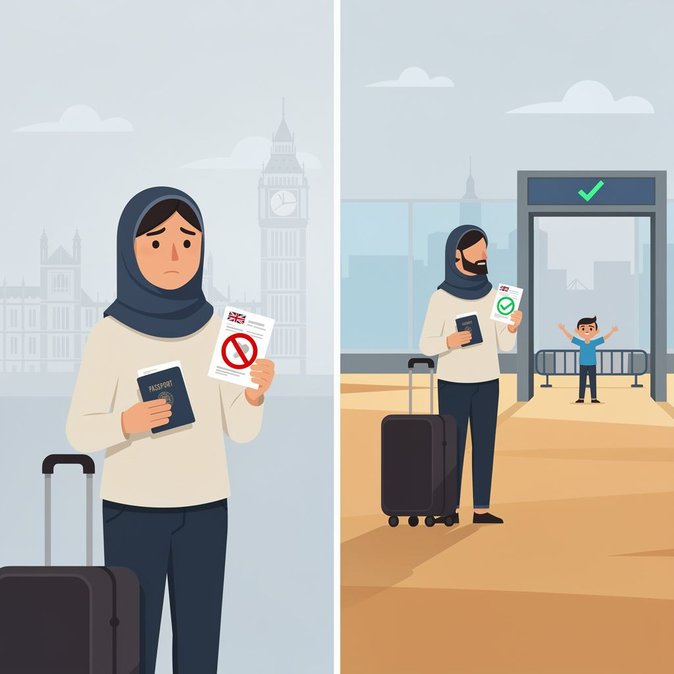
A last-minute Home Office decision has derailed a long-planned family reunion after officials refused a visitor-visa application submitted by Therese Abdallah, a 63-year-old Palestinian Jerusalemite, while simultaneously granting the same trip to her husband, Hazem. The couple had hoped to spend three weeks with their son, a UK-based academic, and to meet their first grand-child in London this August. According to refusal papers seen by The Guardian, entry-clearance officers concluded that Mrs Abdallah was not a “genuine visitor” and might over-stay—despite evidence of property, employment and previous compliant visits. Campaigners say the case illustrates how the standard of proof demanded for Middle-East applicants has quietly hardened since the government’s 2025 immigration white paper, which promised to reduce visitor-visa abuse but offered no new appeal rights. Figures obtained under FOI show refusal rates for Palestinian applicants rising from 18 % in 2024 to 33 % in the first half of 2026. Lawyers argue that the decision typifies the Home Office’s risk-averse culture following April’s internal audit that criticised caseworkers for “excessive grants without adequate evidence”. Because visitor refusals carry no full appeal, the family’s only recourse is a fresh application costing £115 plus £30 biometric fee—money already lost once. The department insists that “each case is assessed on its individual merits”, yet migration-policy academics warn that inconsistencies undermine the UK’s attractiveness for conferences, higher education and expat families. For corporates, the message is that even short business-visitor travel is now less predictable. Employers hosting clients or senior executives from regions deemed “higher-risk” should build extra time and cost into travel planning, supply additional financial and family-ties evidence, and prepare for potential refusals. Mobility managers are also reminded that, since May 2025, repeat refusals are automatically flagged to risk-assessment algorithms, meaning subsequent applications face closer scrutiny. While one contentious rejection might seem minor, experts caution that a pattern of tougher visitor decisions could damage Britain’s soft-power credentials, especially as rival hubs such as Dublin and Amsterdam actively court academic and tech conferences. As a summer of peak travel begins, the Abdallah case is a warning that the UK’s visitor-visa regime remains politically and reputationally sensitive.
Source: The Guardian