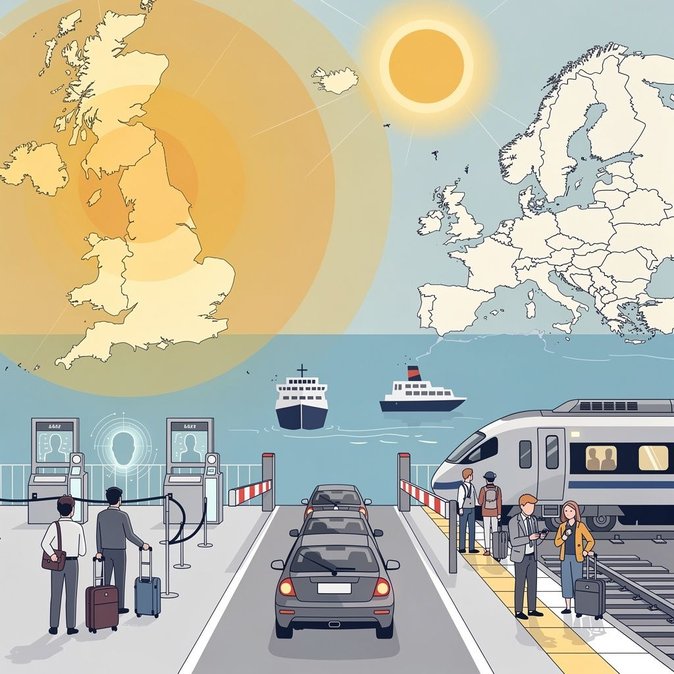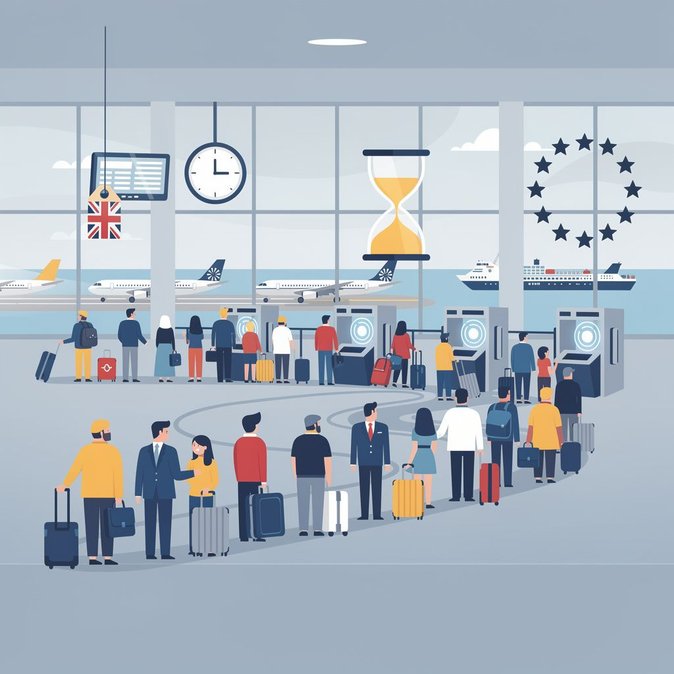
The UK’s Liberal Democrats used a press conference at Heathrow on 24 July to demand an emergency pause of the European Union’s new Entry/Exit System (EES) for the peak holiday season. Party foreign-affairs spokesperson Calum Miller MP said the biometric border scheme, which has been fully operational at Schengen frontiers since April, is “not ready for prime-time” after a string of software glitches and staffing shortfalls left British travellers facing queues of two-to-four hours at airports such as Pisa, Málaga and Milan. Although the EES is designed to replace passport stamping with faster digital checks, multiple EU states—including France, Greece and Spain—have already triggered emergency provisions in EU law allowing temporary reversion to manual controls when systems fail or passenger volumes spike. Airlines and airports warn that the start-up problems are concentrated at juxtaposed and high-volume ports that must capture passengers’ facial images and fingerprints before departure. Heathrow alone expects nearly seven million UK residents to depart for Europe in August; modelling by airport operations consultancy ICF suggests that even a 60-second increase in processing time per passenger would absorb an extra 2.3 million staff hours across EU border posts this summer. From a business-mobility perspective, disruption is hitting not just holidaymakers but also time-sensitive sectors such as automotive supply chains that rely on “just-in-time” movements through the Channel ports. Hauliers have reported missed ferry slots at Dover and Folkestone, incurring penalties on perishable loads, while management-consultancy staff making day-trips to clients on the continent cite two-to-three-hour buffers now added to itineraries. Travel-risk firm International SOS says EES-related delays are triggering a spike in duty-of-care alerts for UK-based multinationals whose employees are transiting Schengen hubs. The Liberal Democrats argue that Prime Minister Andy Burnham should co-ordinate with EU leaders to suspend the biometric component of EES until at least September, mirroring International Air Transport Association (IATA) calls for a “grace period” so border agencies can stabilise software and increase staffing. They also contend that post-Brexit loss of freedom of movement amplifies the impact on UK citizens and businesses because every short-term trip now requires full third-country processing. Practical advice for UK mobility managers includes building longer connection windows into itineraries, pre-notifying travellers about possible manual registration, ensuring corporate travel policies cover additional accommodation costs arising from missed flights, and monitoring real-time wait-time dashboards provided by major airports. Immigration counsel emphasise that EES registration is separate from the forthcoming ETIAS travel-authorisation scheme, now expected to launch in 2027, so no additional paperwork is required for British passport holders—only patience at the border.
Source: Liberal Democrats Press Office