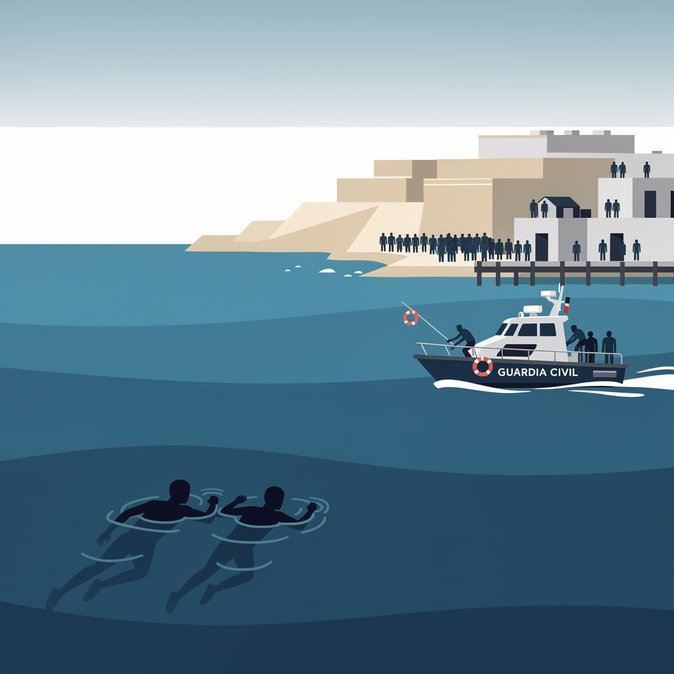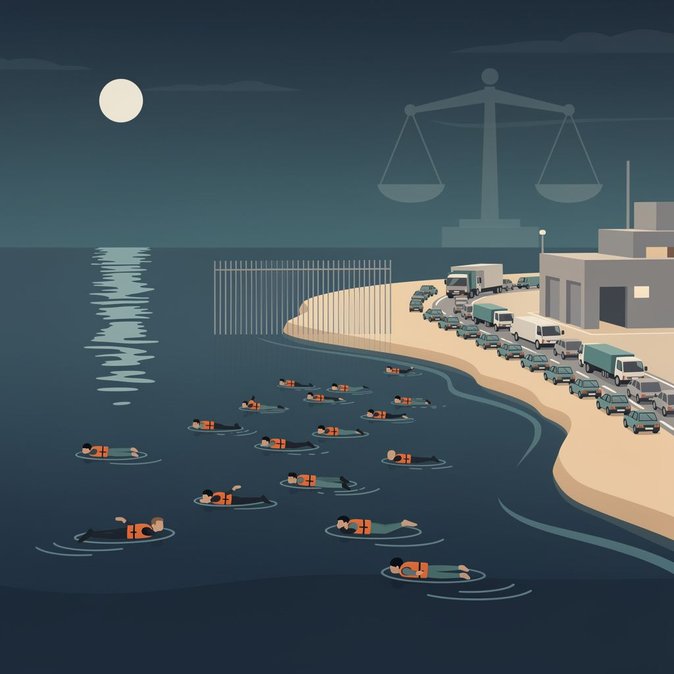
Spanish border forces experienced another intense night between 25 and 26 July as more than 100 people attempted to enter the North-African enclave of Ceuta by swimming from nearby Moroccan beaches. Guardia Civil activated two maritime-patrol boats, all available shore patrols and a rapid-response USECIC unit after radar detected multiple groups entering the water shortly after midnight, local newspaper El Faro de Ceuta reported. Migrants who reached Spanish beaches were transferred to the Fiscal Company facilities for medical screening with the Red Cross before being processed at National Police headquarters. The surge follows a Supreme Court ruling in late June that bans summary “hot-returns” of migrants intercepted at sea, a decision that officials say has produced an immediate “pull effect.” With the summer Operación Paso del Estrecho in full swing, Moroccan security forces are focused on facilitating holiday traffic through Tangier and Tetouan, potentially leaving fewer resources to deter departures toward Spanish territory. Spanish authorities now routinely deploy all available maritime assets each night to avoid drownings and to enforce border security. Business impact: The spike in crossings strains the enclave’s limited reception infrastructure, diverting Guardia Civil resources normally assigned to customs and commercial-cargo checks at the Tarajal land border. Logistics operators report slower processing of EU-bound merchandise, and cross-border workers face longer queues. Companies relocating staff to Ceuta or Tangier should monitor crossing times and consider flexible work arrangements. Looking ahead, the Interior Ministry is evaluating additional support from the Policía Nacional’s Unidade de Intervención Policial (UIP) and has requested more maritime assets from the Salvamento Marítimo fleet to ease pressure on local units.
Source: El Faro de Ceuta