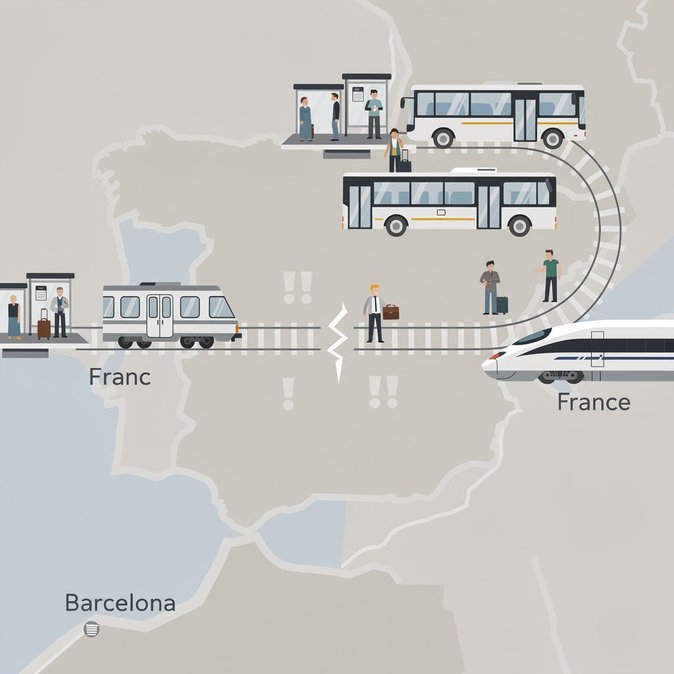
Catalonia’s commuter backbone, the Rodalies R3 line, was suspended at 10:00 on 25 July after a signalling glitch knocked out the traffic-control system between La Garriga and Puigcerdà. The R3 not only carries Barcelona suburbanites but also forms part of the trans-Pyrenean corridor for passengers connecting to SNCF TER services at La Tor de Querol, making the incident relevant to cross-border commuters and leisure travellers alike. Renfe quickly activated its contingency playbook: Regional trains now run only between L’Hospitalet and Fabra i Puig, with onward travel provided by a fleet of 22 coaches linking Fabra i Puig to Puigcerdà and La Tor de Querol. The operator says international tickets to France will be honoured on the bus legs, but seat allocations are first-come, first-served, so travellers should arrive early. The outage piles pressure on Catalonia’s already overstretched commuter network, coming just two days after partial closures on the R2 for unrelated engineering works. Companies with cross-border staff should communicate alternative itineraries, including the option of taking Renfe-SNCF high-speed services via Girona and Perpignan, albeit at a higher fare. Infrastructure manager Adif expects repairs to take "several hours" but could not rule out a multi-day disruption if replacement parts need to be flown in. The incident highlights the vulnerability of ageing analogue signalling on secondary cross-border routes just as the EU pushes for seamless rail mobility. Long-term, Spain’s Transport Ministry plans to upgrade the R3 to European Rail Traffic Management System (ERTMS) standards by 2029, but funding has yet to be fully secured. Travellers should check the Rodalies app or @Renfe Twitter feed before departure and consider travel insurance that covers missed onward connections, particularly for same-day flights out of Lyon or Toulouse.
Source: Ara (Catalonia)