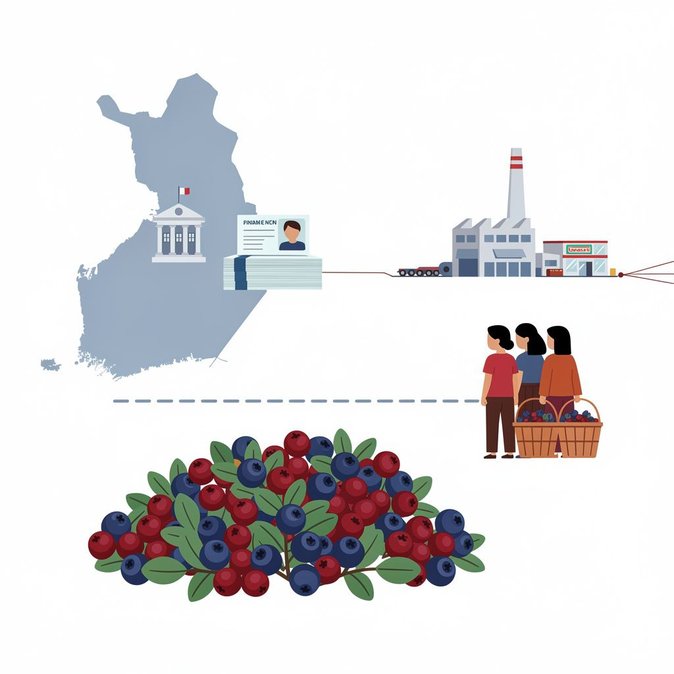
Preliminary figures released by Statistics Finland show that the country’s population grew by a mere 16 people in the first half of 2026, the weakest start-of-year gain in more than a decade. The sliver of growth was achieved only because net immigration—5,226 more arrivals than departures—offset Finland’s ongoing natural decrease, where deaths continue to outnumber births. Between January and June, 19,720 people moved to Finland while 14,494 left. Arrivals were down 1,832 on the same period last year, but departures jumped by 5,863, largely because of a new data-sharing treaty with Estonia that has prompted thousands of Finns and Estonian nationals to update their official country of residence. Ukraine remained the largest single source country for newcomers (3,179 arrivals), although that inflow has tapered off as temporary-protection holders move on or return home. Demographers note that the preliminary fertility uptick that began in 2025 has continued, with 23,662 births recorded in the first six months and the 12-month total-fertility rate edging up to 1.34. Nonetheless, the figure is still well below the replacement level of 2.1 and below the pandemic-era high of 1.46 reached in 2021. For employers, the data underline how dependent Finland’s labour market will remain on foreign talent to offset an ageing workforce. Business-lobby group EK is urging the government to accelerate its two-week “Fast Track” residence-permit scheme for specialists and to streamline family-reunification rules, warning that net migration of barely 5,000 people is inadequate to meet projected skills gaps in ICT, healthcare and green-tech manufacturing. At policy level, the Ministry of the Interior has pledged to publish a comprehensive migration strategy by the end of the year that aligns labour-migration targets with education, housing and integration budgets. Negotiations with municipalities are already under way to expand Finnish-language training and speed up recognition of foreign qualifications—seen as critical steps if Finland is to remain competitive in the Nordic talent race.
Source: Helsinki Times