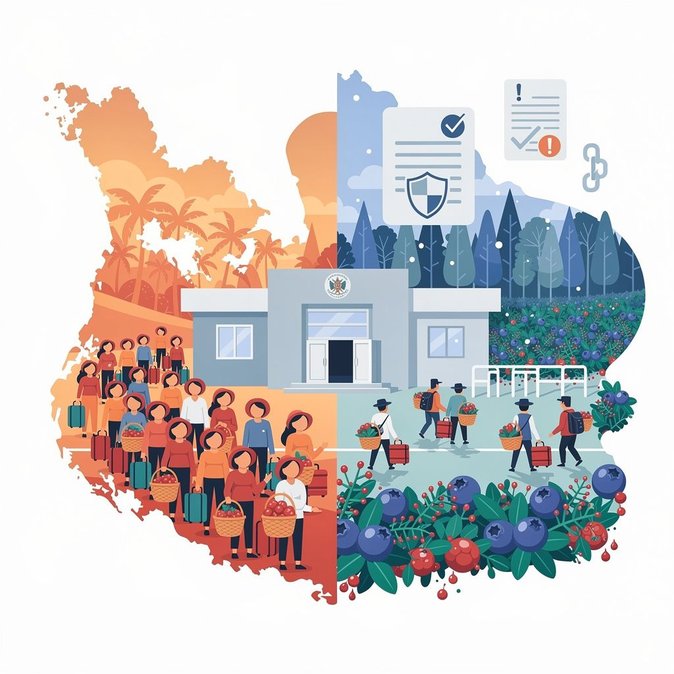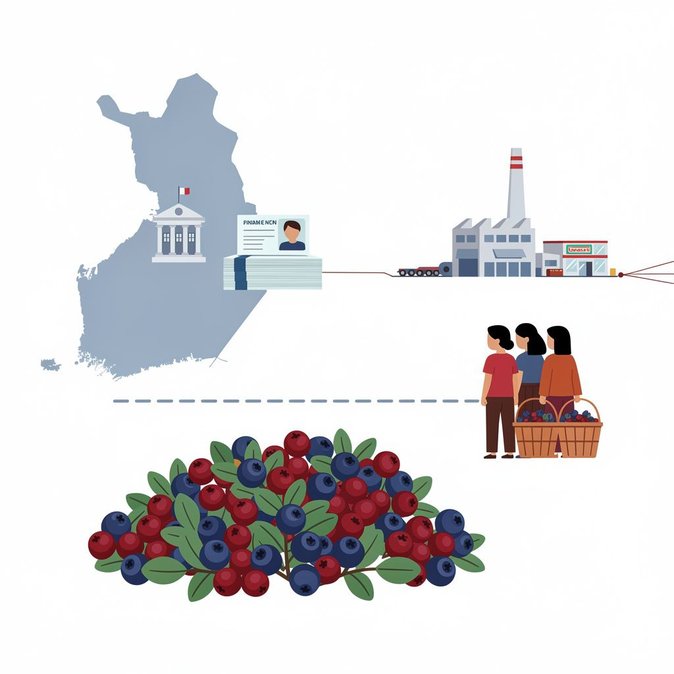
Finland’s wild-berry industry faces an acute labour shortage after the Ministry for Foreign Affairs confirmed that only 123 seasonal work visas have been issued to Thai pickers for the 2026 harvest. According to the Bangkok embassy, more than 2,200 Thai nationals applied for seasonal work visas, but the vast majority were refused because officials judged that the risk of labour exploitation and human-trafficking was too high. The tougher line follows two high-profile trafficking convictions handed down by Finnish courts in 2023 and 2025, in which Thai pickers were found to have been lured to Finland with unrealistic earnings promises and forced to work in debt-bondage conditions. Consular staff say each application was subjected to an individual risk assessment that looked at the recruiter’s history, employment terms and the applicant’s vulnerability to debt. Finnish berry processors warn that the decision could leave millions of kilos of bilberries, lingonberries and cloudberries unharvested. Companies have already pivoted to frozen imports, but say margins will tighten and some smaller operators may suspend business for the season. Retailers expect consumer prices to rise sharply, while food manufacturers fear supply bottlenecks for domestic berry ingredients that are marketed as a hallmark of Finnish provenance. Finance Minister Riikka Purra (Finns Party) has defended the strict visa policy, arguing that domestic jobseekers—including unemployed young people—should be mobilised to pick berries. Labour market researchers counter that the work is physically demanding, migratory by nature and paid almost entirely on a piece-rate basis, making it unattractive to most local workers. In the longer term, stakeholders are calling for a comprehensive overhaul of the seasonal work visa framework. Proposals include obliging berry companies to provide guaranteed minimum earnings, capping recruitment fees in source countries, and expanding social-security coverage for pickers. The Ministry of Economic Affairs and Employment is expected to convene a working group in August to examine possible reforms before the 2027 harvest.
Source: Yle Selkouutiset