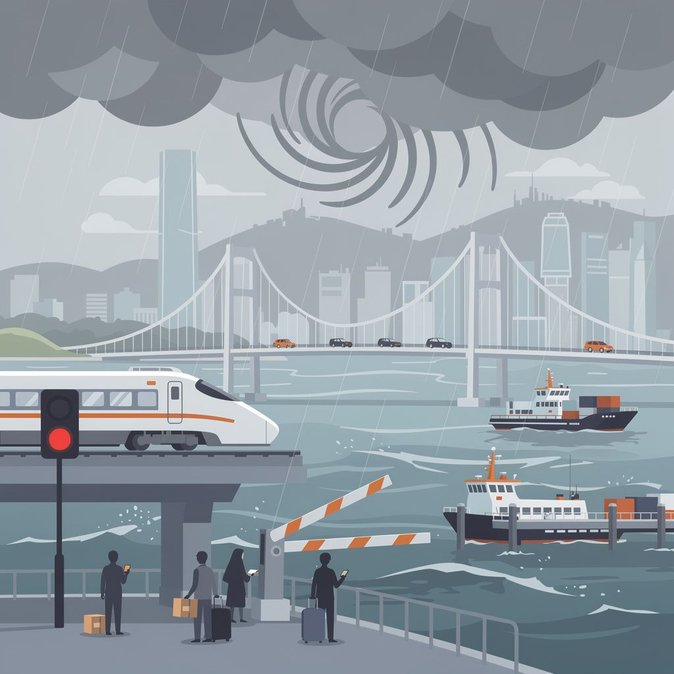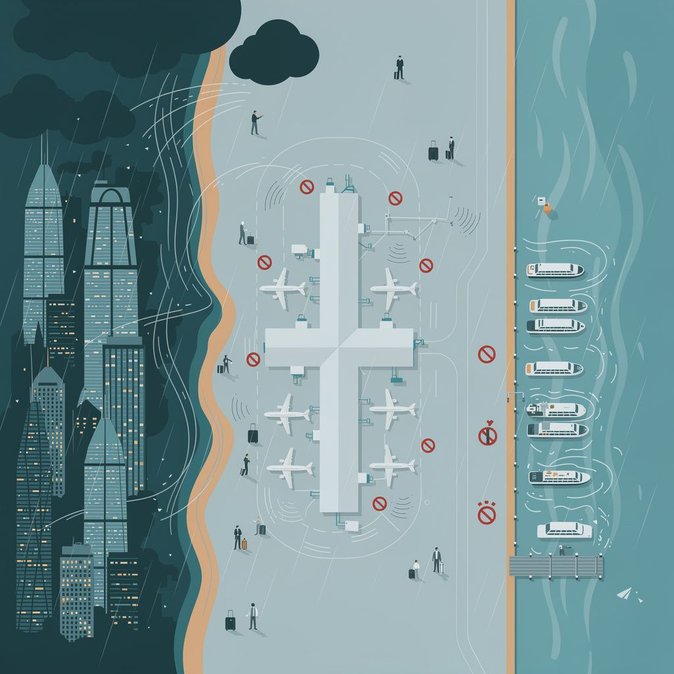
Hong Kong’s sophisticated transport hub ground to an almost complete stand-still on Saturday evening after the Observatory hoisted Tropical Cyclone Signal No. 8 for Severe Tropical Storm Noul. Airport Authority figures show 49 departures and 20 arrivals were cancelled and more than 230 flights were delayed by late afternoon, as Cathay Pacific, HK Express, Singapore Airlines and other carriers pre-emptively scrubbed services to protect passengers and crews. The shutdown extended beyond aviation. The Marine Department confirmed that all pilotage services – mandatory for oceangoing vessels entering or leaving Victoria Harbour – were suspended from 7:30 p.m., effectively halting container-ship and cruise movements. Both TurboJET and Cotai Water Jet ferries linking Hong Kong with Macau announced the suspension of sailings once Signal No. 8 came into force, while Sun Ferry halted all out-lying-island services until conditions improved. Travellers already at Chek Lap Kok reported long queues at airline service desks and a scramble for scarce hotel rooms. Business passengers connecting to onward long-haul flights were particularly hard-hit; one Singapore-bound executive told RTHK she would miss Monday meetings and incur re-booking costs. Airport Authority officials said a “flight re-sequencing mechanism” would be activated once weather permitted, in an effort to clear the backlog and restore schedules within 24 hours. The cascading disruptions illustrate how weather events can ripple through every layer of Hong Kong’s mobility ecosystem. Companies with staff on expatriate rotation or frequent-flyer schedules should ensure robust duty-of-care protocols, including automated itinerary tracking and instant re-booking tools. Logistics managers are likewise advised to build storm-related buffer time into shipping contracts during the July-October typhoon season. Although Noul was downgraded to a tropical storm by Sunday afternoon, analysts estimate the city lost more than 36 hours of transport capacity – a reminder that climate-related volatility is now a board-level mobility risk in Asia’s premier business gateway.