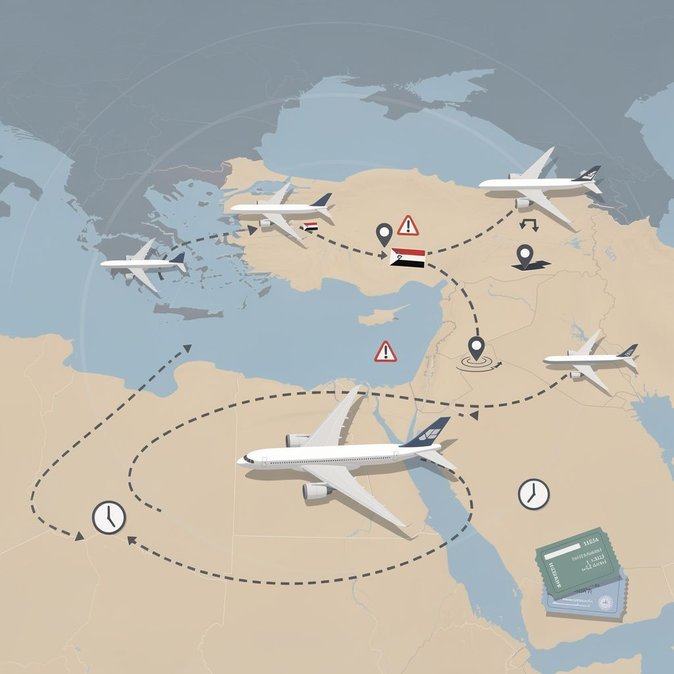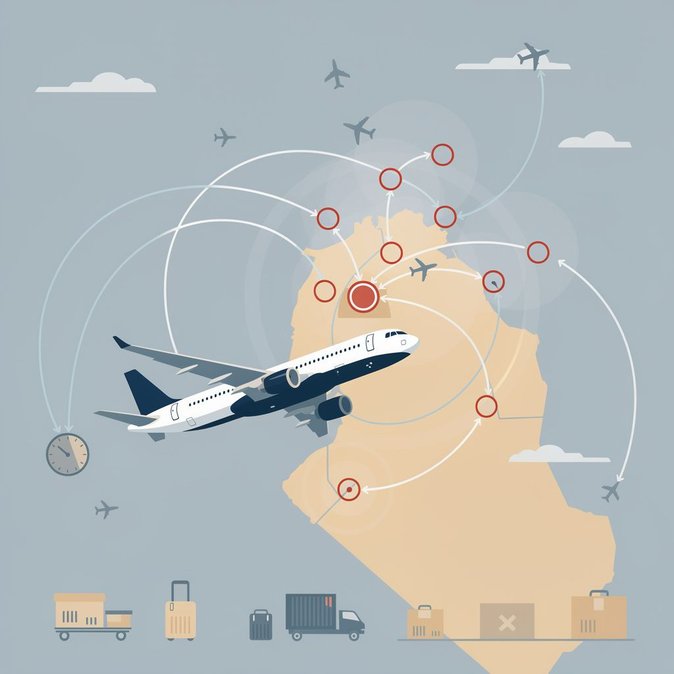
The UAE’s General Civil Aviation Authority issued an urgent notice on 27 July 2026 announcing the temporary and partial closure of national airspace. Officials said the decision was taken after a rapid security assessment in coordination with regional and international partners, following a weekend of intensified missile and drone activity linked to the renewed US–Iran confrontation. While the Authority did not specify which flight information regions (FIRs) were affected, industry sources confirmed that restrictions mainly covered the Emirates FIR over the northern Gulf and selected corridors into Dubai and Abu Dhabi. Foreign carriers were told to reroute around the embargoed zones or obtain ad-hoc clearances; UAE carriers were permitted to continue limited operations on “secured corridors” vetted by the military. The closure created an immediate ripple effect. Emirates, Etihad and flydubai pre-emptively cancelled more than 40 departures, and ground-handling firms at Dubai International (DXB) reported holding positions for inbound aircraft for up to three hours. Cargo operators shifted urgent freight to Jebel Ali port or Oman’s Sohar airport, illustrating the vulnerability of just-in-time supply chains to geopolitical shocks. Corporate travel managers were advised to activate contingency plans, including flexible ticketing and remote‐work protocols for staff due to transit the UAE this week. Immigration authorities confirmed that passengers stranded in the Emirates will receive automatic visa-overstay fee waivers until 31 July. Although the GCAA stressed that passenger and crew safety “remain absolute priorities,” analysts caution that repeated airspace disruptions could erode the UAE’s reputation as a stable regional hub and may accelerate insurance premiums for flights routed through the Gulf. Businesses with time-critical mobility needs should monitor GCAA bulletins and maintain dialogue with carriers regarding rebooking options.
Source: Emirates News Agency (WAM)