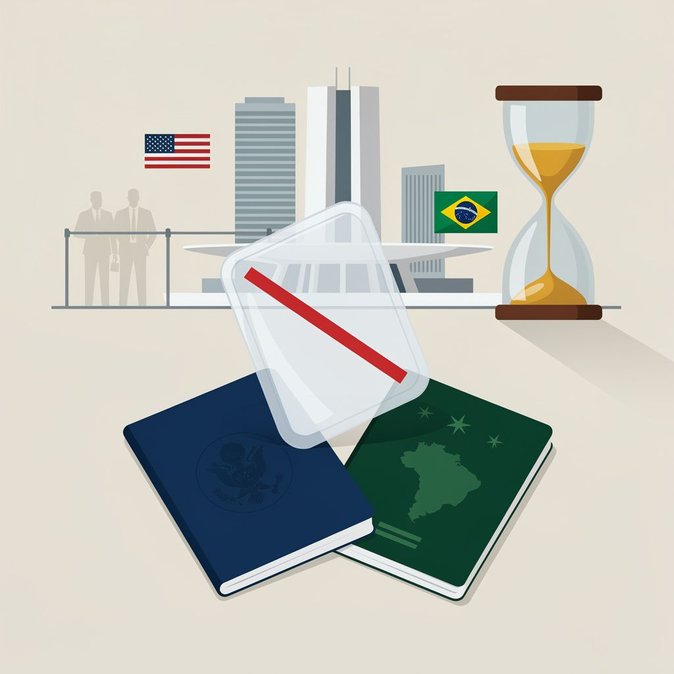
Brazil’s Ministry of Foreign Affairs confirmed on 27 July that it rejected visa requests from two senior U.S. State Department officials—Assistant Secretary Riley Barnes and Deputy Assistant Secretary Samuel Samson—who planned to travel to Brasília from 27–30 July to discuss election integrity, religious freedom and freedom of expression. According to the Associated Press, the officials filed their applications on 20 July and were formally refused on 24 July, only days after right-wing presidential candidate Flávio Bolsonaro repeated allegations—long dismissed by Brazil’s courts—about vulnerabilities in the country’s electronic voting system. The Lula administration framed the decision as a matter of sovereignty and “reciprocity,” insisting the visit could be construed as foreign interference in the run-up to the October general election. For global mobility managers, the episode underscores how swiftly political frictions can translate into visa denials. U.S. companies planning short-notice, high-level travel to Brazil should re-check visa issuance time-lines and have contingency plans in case further denials are issued. The refusal also highlights Brazil’s renewed willingness to use visa policy as diplomatic leverage—an approach already visible this year in the phased re-introduction of visa requirements for U.S., Canadian and Australian tourists. Practically, business travelers with U.S. passports should anticipate heightened scrutiny, longer processing times and the possibility that high-profile or government-affiliated travelers will face additional delays. Corporations are advised to file visa applications well in advance, provide detailed itineraries and maintain close contact with Brazilian consulates. The situation will be monitored closely by election observers and chambers of commerce, which fear the spat could spill over into trade or lead to wider tit-for-tat restrictions.
Source: Associated Press