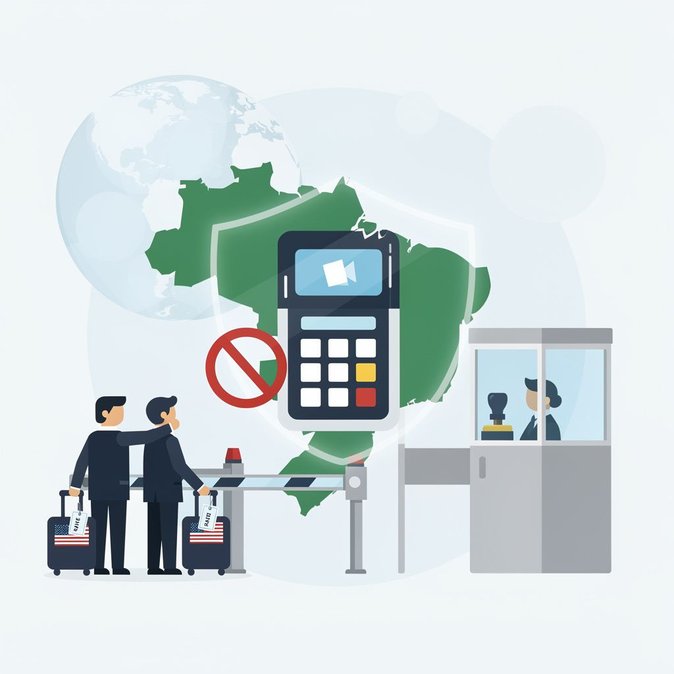
The Ministry of Foreign Affairs (Itamaraty) confirmed on 25 July that it rejected visa requests submitted by Riley M. Barnes and Samuel Samson, two senior U.S. State Department officials. According to diplomatic sources, the applications were filed on 20 July and formally refused on the evening of 24 July after Brazilian authorities concluded the pair intended to meet opposition figures and produce a report questioning the integrity of Brazil’s electronic‐voting system. The decision follows a Washington Post disclosure that the Trump administration was preparing an “observation mission” timed to precede Brazil’s 4 October general elections. Brasília interpreted the move as an attempt to sow doubt about the forthcoming vote and to bolster domestic narratives promoted by presidential candidate Flávio Bolsonaro alleging vulnerability in Brazil’s tallying software. By invoking article 7 of the 2017 Migration Law, which allows visas to be denied when applicants are deemed to pose a threat to national interests, Itamaraty signalled a firm stance against foreign interference. Senior officials privately said the ruling was also calibrated to avoid a precedent in which other governments dispatch “election inspectors” outside multilateral frameworks agreed with the Electoral Court (TSE) and the Organization of American States. For multinationals, the episode underscores Brazil’s readiness to enforce entry controls on political grounds and foreshadows heightened scrutiny of foreign delegations during the campaign season. Companies planning to bring in observers, consultants or media crews should allocate additional lead-time for visa processing and be prepared to document the strictly technical nature of their activities. Practically, the refusal does not change ordinary business-travel procedures, but it is a reminder that political context can override standard timelines—even for travellers holding U.S. diplomatic passports. Mobility managers should monitor advisories from both the TSE and Itamaraty and counsel executive travellers to avoid any public comment on Brazil’s electoral infrastructure while in-country.
Source: Exame / UOL