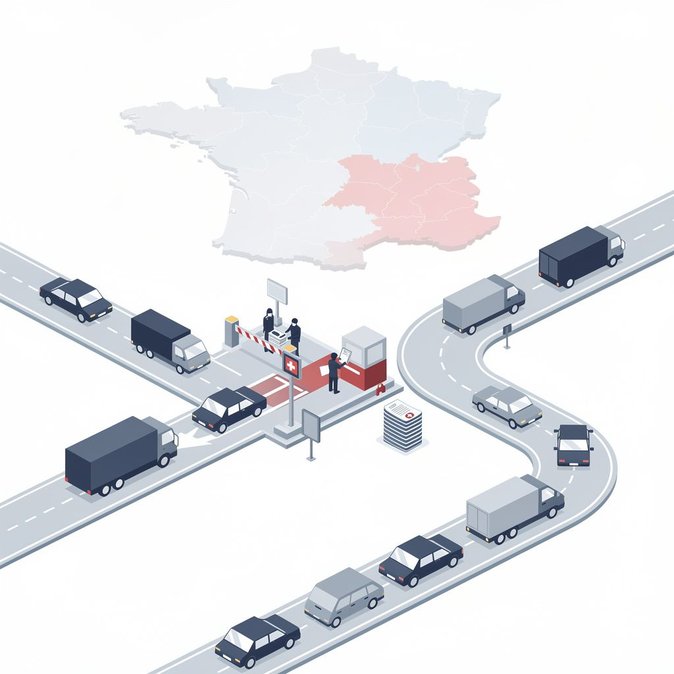
Germany’s Federal Foreign Office updated its travel and security advice on 27 July 2026 to highlight France’s indefinite extension of police and customs controls at all land, air and sea borders—including crossings with Switzerland. While the measure is primarily linked to France’s elevated terrorism alert level and the residual security footprint of June’s G7 summit in Évian, it has immediate implications for the 188,000 daily commuters and leisure travellers who shuttle between the Lake Geneva region and neighbouring French departments. Motorists report sporadic 20- to 40-minute delays at the Bardonnex (A1) and Thônex-Vallard checkpoints, especially during morning peak hours. Logistics operators moving time-sensitive pharma and watch-industry components say they are rerouting some cargo via the Basel-Mulhouse corridor, incurring higher tolls but shaving unpredictable waiting times. Mobility advisers are urging companies to factor potential hold-ups into posted-worker notifications and to keep copies of intra-corporate-transfer letters readily available for ad-hoc inspections. French authorities have not specified an end date, stating only that the regime will be “re-evaluated monthly.” The Swiss customs service (BAZG) continues to staff the Swiss side normally but advises lorry drivers to use pre-lodged customs declarations to speed up formalities. Business-travel programmes should therefore refresh traveller-tracking alerts for itineraries that include overland segments between Switzerland and France and remind passengers to carry both identity documents and proof of accommodation or meeting invitations, as French officers increasingly request supporting paperwork.
Source: German Federal Foreign Office