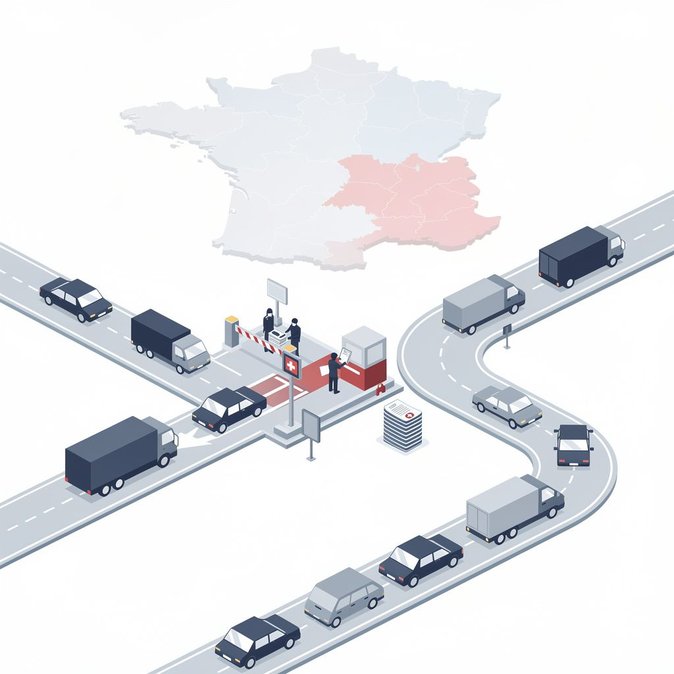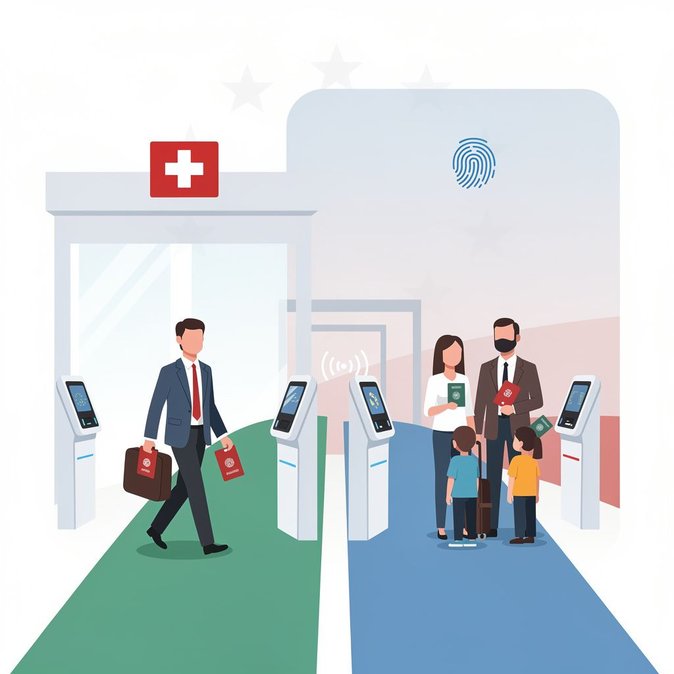
The European Commission’s Directorate-General for Migration & Home Affairs issued a news brief on 27 July 2026 reminding travellers that the Schengen Entry/Exit System (EES)—operational since 10 April—does not apply to EU citizens or nationals of the European Free Trade Association, including Switzerland. Under the EES, third-country visitors now provide fingerprints and facial images at automated kiosks when entering the Schengen zone, replacing manual passport stamps. Swiss citizens, however, will continue to enjoy the same treatment accorded to EU passport holders: presentation of a valid ID card or passport plus (where relevant) a long-stay visa or residence permit. The exemption also extends to Swiss cross-border commuters who use G-permits to work in neighbouring countries. For Swiss companies that routinely dispatch technicians or executives to EU clients, the confirmation removes lingering uncertainty about whether staff would face longer queues or need to pre-register biometrics. Travel-management firms say the clarification allows them to update risk assessments and keep “fast-track” profiles focused on actual third-country employees. Nevertheless, the Commission cautions that border police may still perform random checks and that carriers must verify travel-document validity before boarding. Employers are therefore advised to continue educating staff on carry-along proof of residence or work authorisation where applicable—particularly dual nationals travelling on a non-Swiss passport. Looking ahead, Brussels plans to link the EES with the upcoming ETIAS travel-authorisation system in early 2027. Although Swiss nationals remain exempt, any accompanying third-country family members will need both an approved ETIAS and biometric EES record—an operational nuance corporate mobility teams should already be building into family-relocation budgets.