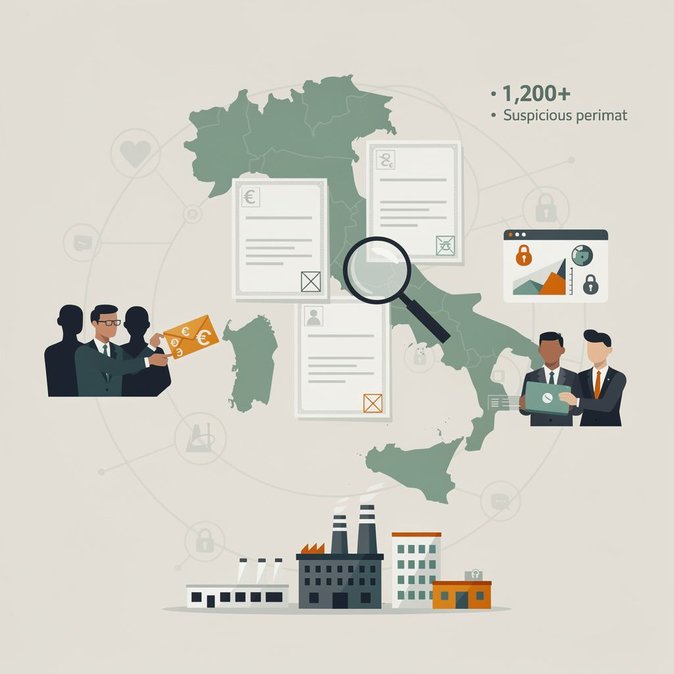
In a coordinated dawn raid on July 27, 2026, the Carabinieri Command for Labour Protection and the Salerno branch of the Guardia di Finanza executed 22 precautionary measures against an alleged people-smuggling ring that was operating across eight Italian regions. Investigators say the organisation provided hundreds of non-EU nationals with falsified labour clearances (nulla osta) and supporting documents in order to obtain entry visas or to regularise their status during the annual ‘decreto-flussi’ and amnesty procedures. According to the case files, the network relied on a supply chain of corrupt intermediaries: immigration “brokers” who recruited clients abroad; compliant employers willing to sponsor fictitious jobs; and accountants and lawyers who filed the applications during the highly competitive online “click-day”. In many cases, fake employment contracts were paired with forged payslips so that applicants appeared to meet minimum-salary thresholds. Individual migrants reportedly paid between €3 000 and €8 000 for the service, generating illicit profits estimated in the millions. The investigation also uncovered a sophisticated document-laundering operation that reused the identities of defunct companies to create a paper trail robust enough to survive first-level scrutiny by Italian consulates. Prosecutors have charged the suspects with criminal conspiracy, aiding and abetting illegal immigration, aggravated fraud and money laundering. Asset seizures targeting real estate and bank accounts are already under way to recover unlawful gains. For global-mobility and HR managers, the case is a stark reminder that the Italian authorities are stepping up post-entry checks and document forensics; sponsors who unwittingly engage unverified intermediaries risk criminal exposure and reputational damage. Companies are urged to audit their immigration supply chains, use only licensed consultants and keep complete files demonstrating the genuineness of their labour needs. HR teams should also warn employees that purchasing false documentation can lead to immediate expulsion and long-term Schengen bans. The crackdown comes as Italy prepares for the next quota-based entry decree and amid EU pressure to curb irregular migration. Compliance teams should expect heightened scrutiny of nulla osta requests in the upcoming application windows and factor potential delays into assignment planning.
Source: Rai News