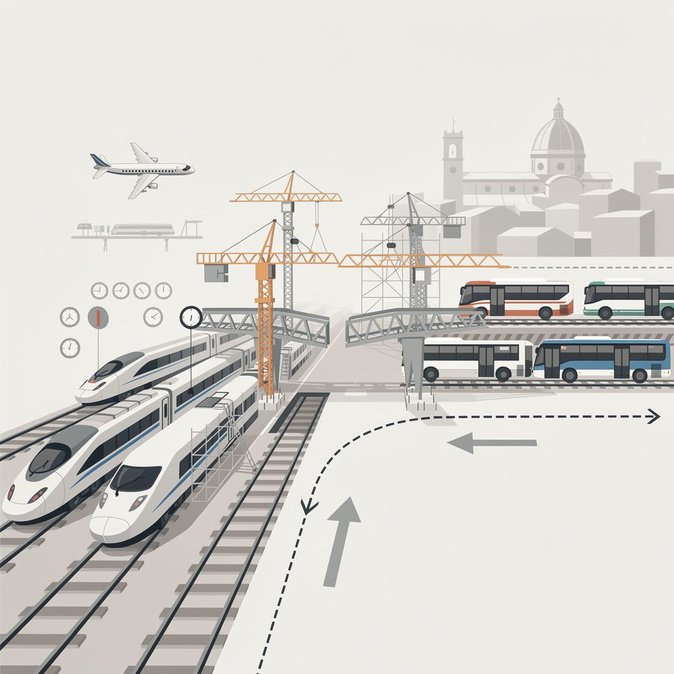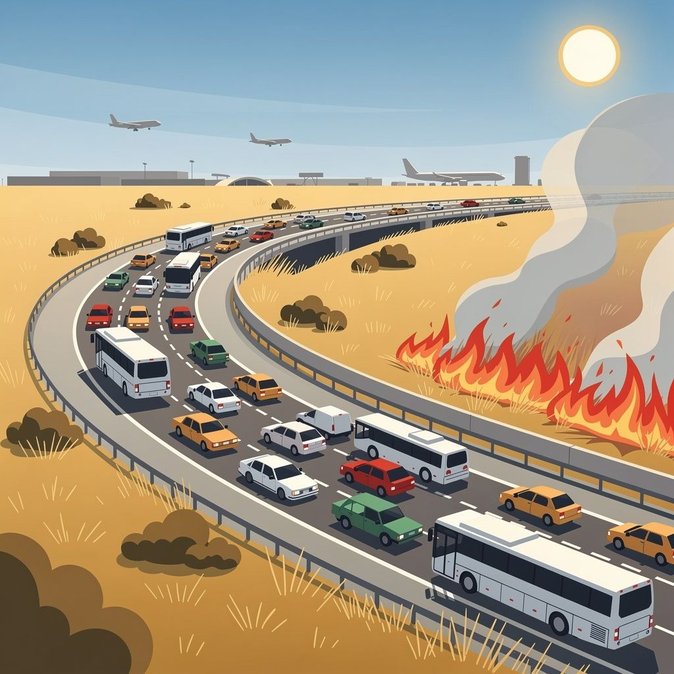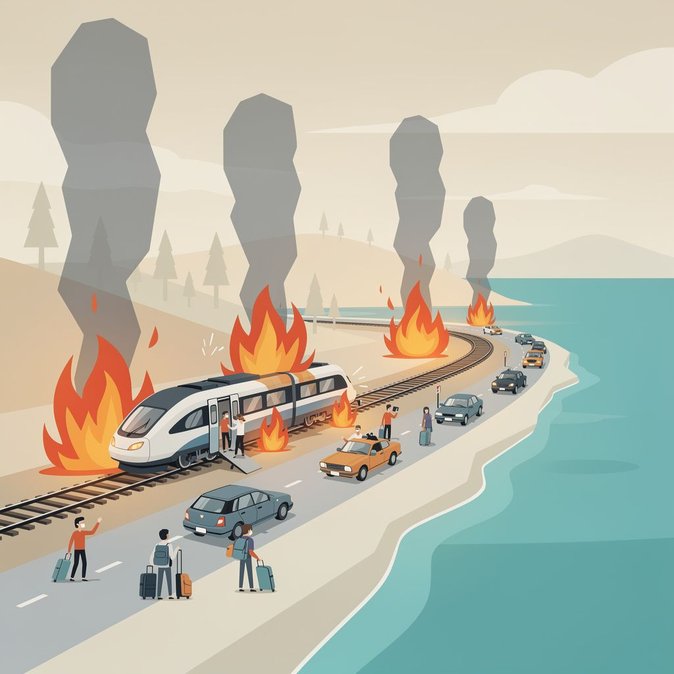
A ferocious wave of wildfires swept across the Gargano peninsula in Puglia and the neighbouring coast of Molise on Sunday, forcing the evacuation of beaches, campsites and a residential care home and paralysing key transport links at the height of the tourist season. Local authorities ordered the closure of the panoramic SP 52 litoranea between Vieste and Peschici as well as a stretch of the SS 693 ‘Lakes of Lesina and Varano’ highway. Ferrovie del Gargano diverted bus services inland, while ANAS advised motorists to avoid the entire coastal corridor. Further north, flames jumped the Adriatic rail corridor near Campomarino Lido, halting both tracks of the Bologna-Bari main line. A northbound Frecciarossa with 400 travellers and an Intercity carrying 100 were trapped at Termoli station for hours until substitute coaches could be organised. The incident spotlighted the vulnerability of Italy’s single-track coastal rail infrastructure just weeks after parliament approved new climate-adaptation funding for transport. Tour operators reported hundreds of foreign visitors stranded after resort evacuations. The Civil Protection Department opened emergency shelters in Peschici’s primary school, and the coast guard ferried beachgoers to safety by boat as orange smoke blanketed the shoreline. While no fatalities were recorded, authorities warned that hot, dry winds could reignite embers over the next 48 hours. For multinational firms running summer incentive trips or expatriate assignments in southern Italy, the fires are a timely reminder to review duty-of-care protocols. Employees should register itineraries, carry travel insurance that covers natural-disaster disruption, and monitor alerts from Italy’s Protezione Civile app. Logistics managers moving goods along the Adriatic axis should expect residual rail delays through mid-week, while coach operators may face detours of up to 60 kilometres until the SS 16 and SS 693 reopen. In the longer term, experts at the National Research Council warn that the frequency of extreme wildfires in southern Italy is projected to double by 2030. Mobility planners may need to diversify routing and consider seasonally adjusted contingency budgets for both passenger and freight movements in high-risk regions.
Source: ANSA